Mixing everyday glass vases with a few Japanese-inspired ceramics.
This is one of the simplest ways to create a "Japandi" atmosphere with minimal items.
Here are 5 ways I styled a wooden compote to balance these two textures.
Style 1:Starting with the Basics
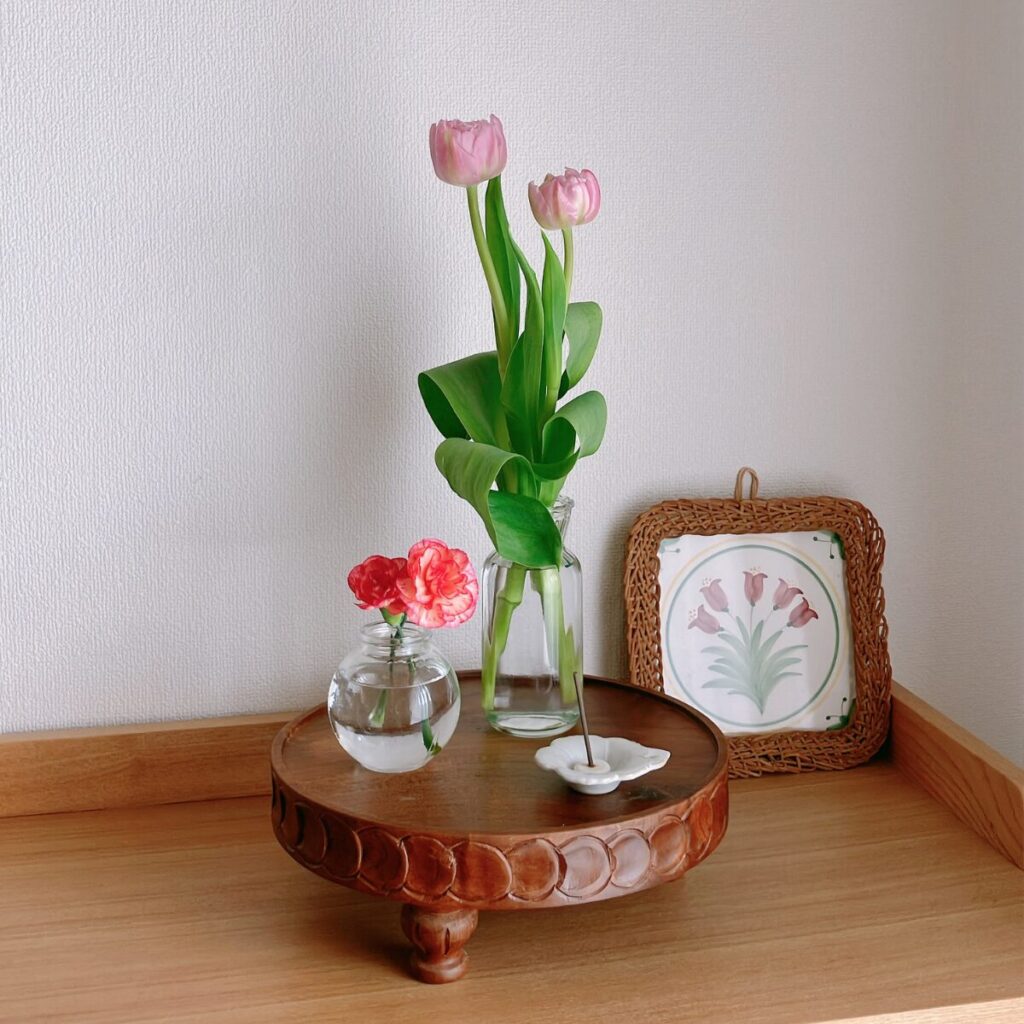
I started with the bare minimum: two glass vases and a small plate.

By arranging them at three distinct heights—the tall tulip, the lower carnation, and the low candle—I made sure every piece has its own space to breathe.
It’s a simple way to create a sense of openness on a small wooden compote.

This little Hanamame-zara is simply a small, flower-shaped Japanese plate.
Here, I'm using it to hold an incense holder and incense, but the base plate itself is easy to swap.
Having a few different styles allows you to instantly change the mood of the corner.
The white version, in particular, is versatile and blends seamlessly with almost any style.
Items Used:
- Wooden compote
- Glass vases in two shapes
- Hanamame-zara flower plate
- Small candle or Incense
Style 2: Layering with Transparency
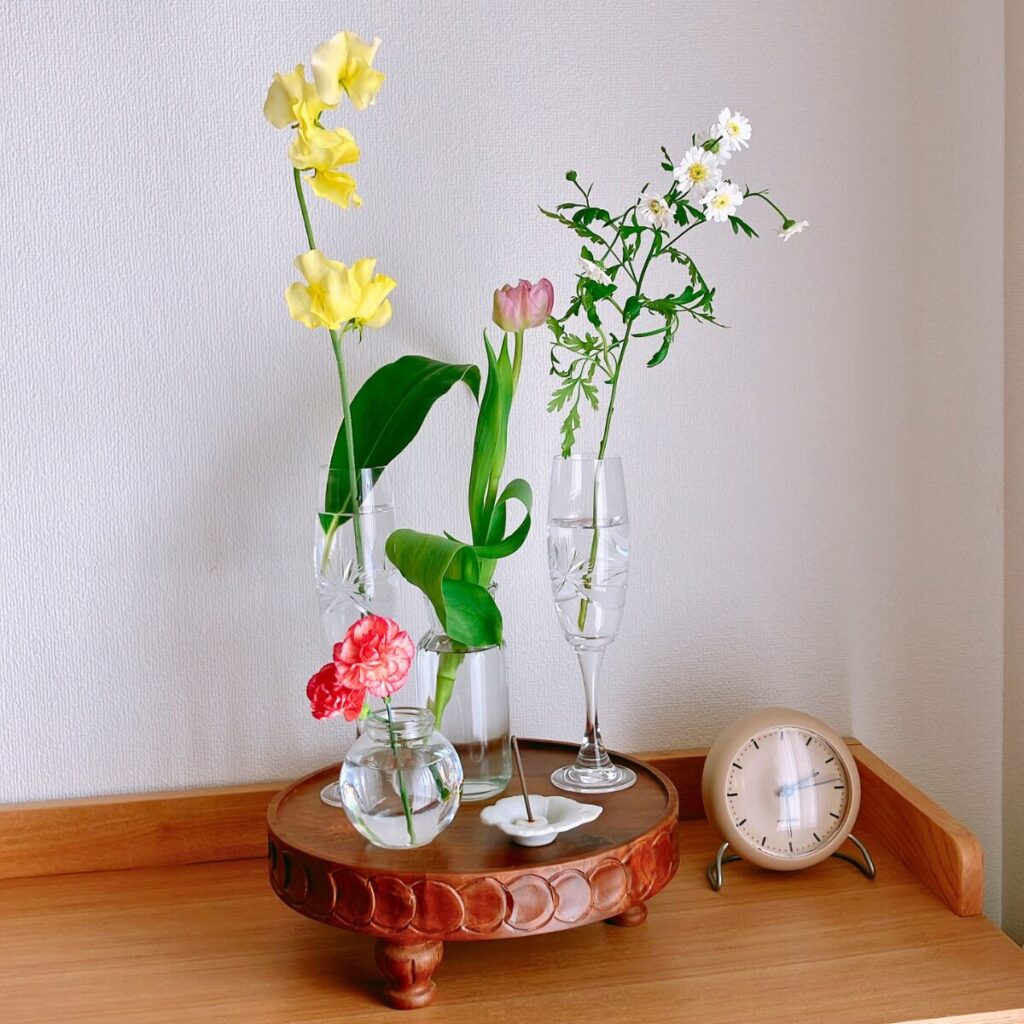
I added two champagne glasses, bringing the total to five items.

By placing only one or two stems in each vase, I can really appreciate the unique expression of every flower and feel the arrival of spring.
Even with more pieces, the transparency of the glass keeps the overall look light and airy.
Items Used:
- Wooden compote
- Champagne glasses x 2
- Glass vases in two shapes
- Hanamame-zara flower plate
- Small candle or Incense
Style 3: Centering with Ceramics
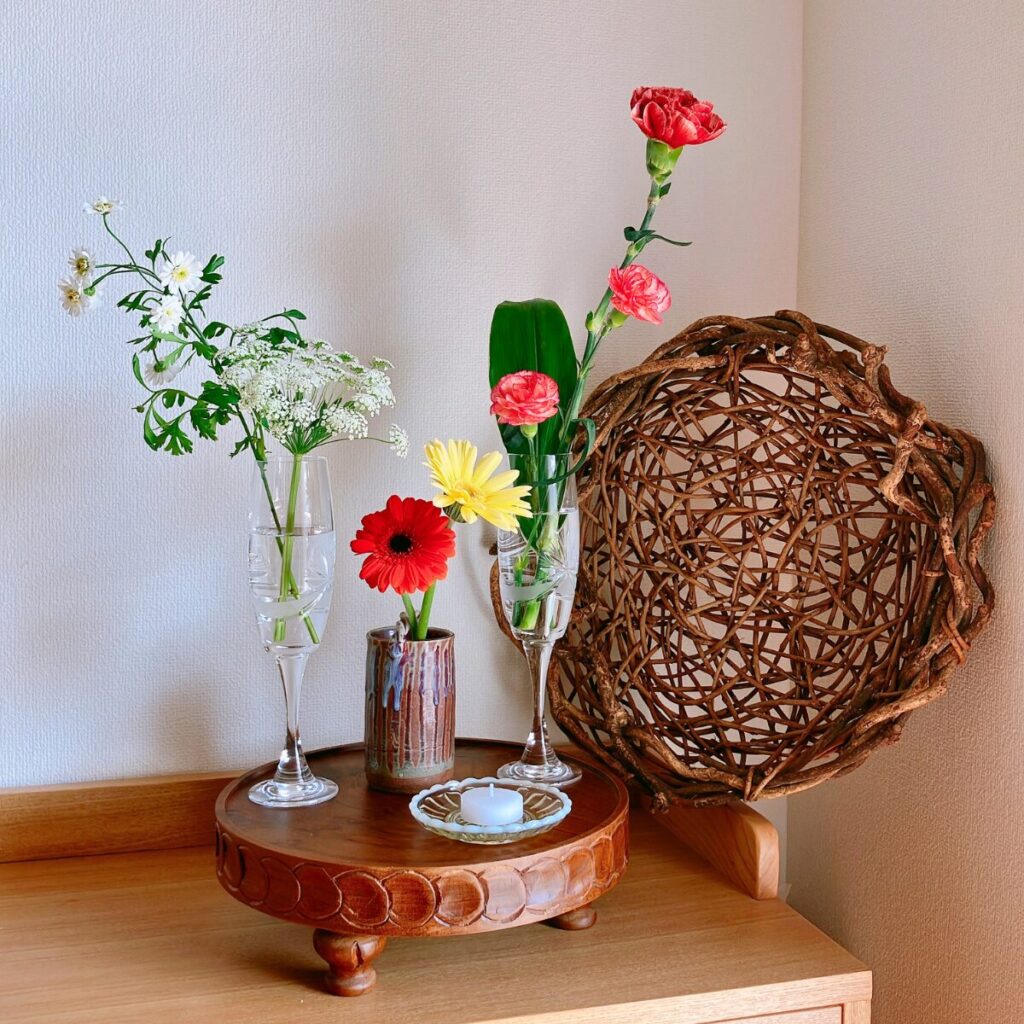
I replaced the center glass with a Japanese ceramic vase and trimmed the gerberas to sit a bit lower.
To add more depth, I placed an akebia basket in the background.

Bringing the center of gravity down and mixing these different textures—clay, vine, and glass—made the whole setup feel more anchored.
This contrast between the "solid" clay and "clear" glass is exactly what I was looking for.
Items Used:
- Wooden compote
- Champagne glasses x 2
- Japanese ceramic vase
- Hanamame-zara flower plate
- Small candle or Incense
- Akebia basket for background
Style 4: Grounded Harmony with a Yunomi
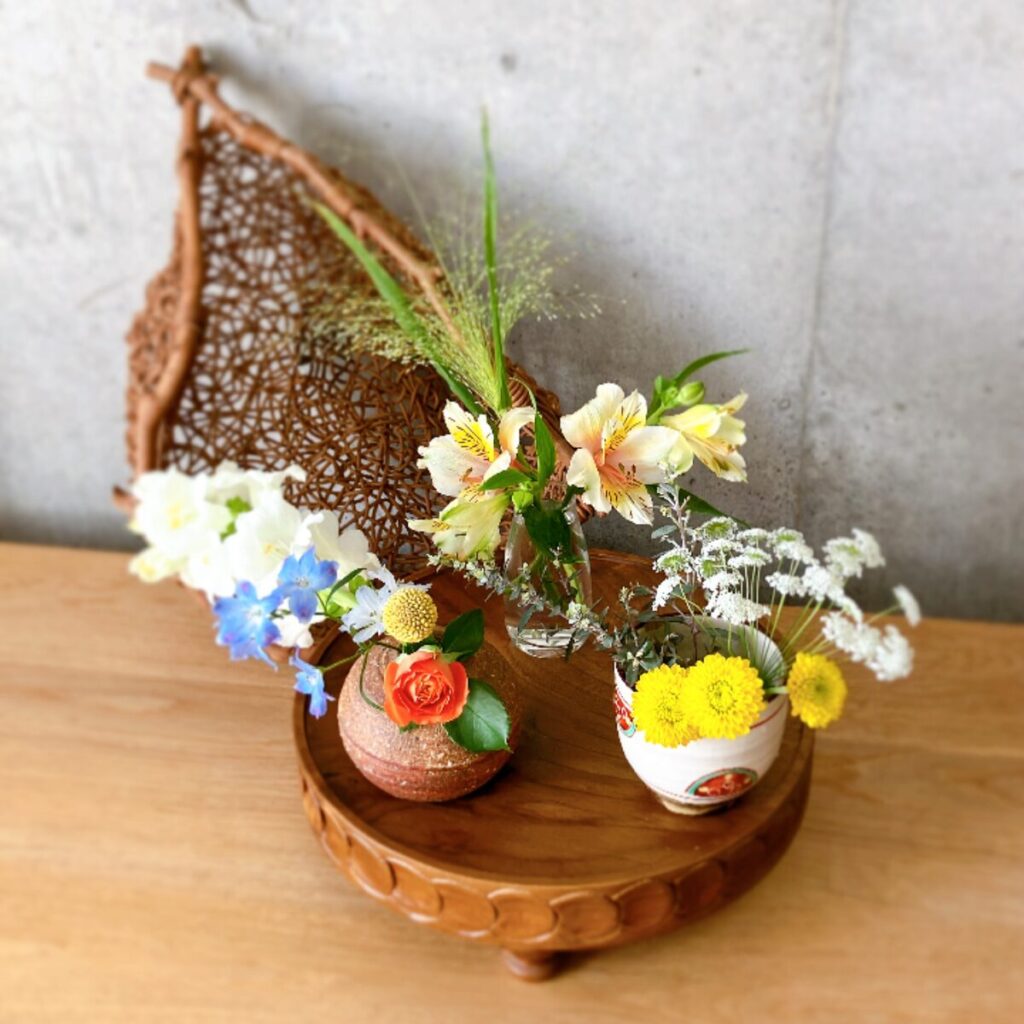
I aligned the heights of the yunomi, the Kasama-yaki vase, and the low glass vase.

By keeping the flowers at the same level, the density increases, creating a natural sense of volume and gorgeousness.
It shows that even without height, you can create a strong presence on the compote.
Variation: Adjusting the Balance with Subtraction

If the aligned look feels a bit too busy, replacing one vase with a low candle is also a nice way to balance the space.
It’s a simple way to create more "breathing space" and adjust the atmosphere depending on the mood of the day.
Items Used:
- Wooden compote
- Yunomi
- Kasama-yaki round ceramic vase
- Low glass vase
- Hanamame-zara flower plate
- Small candle or Incense
- Akebia basket for background
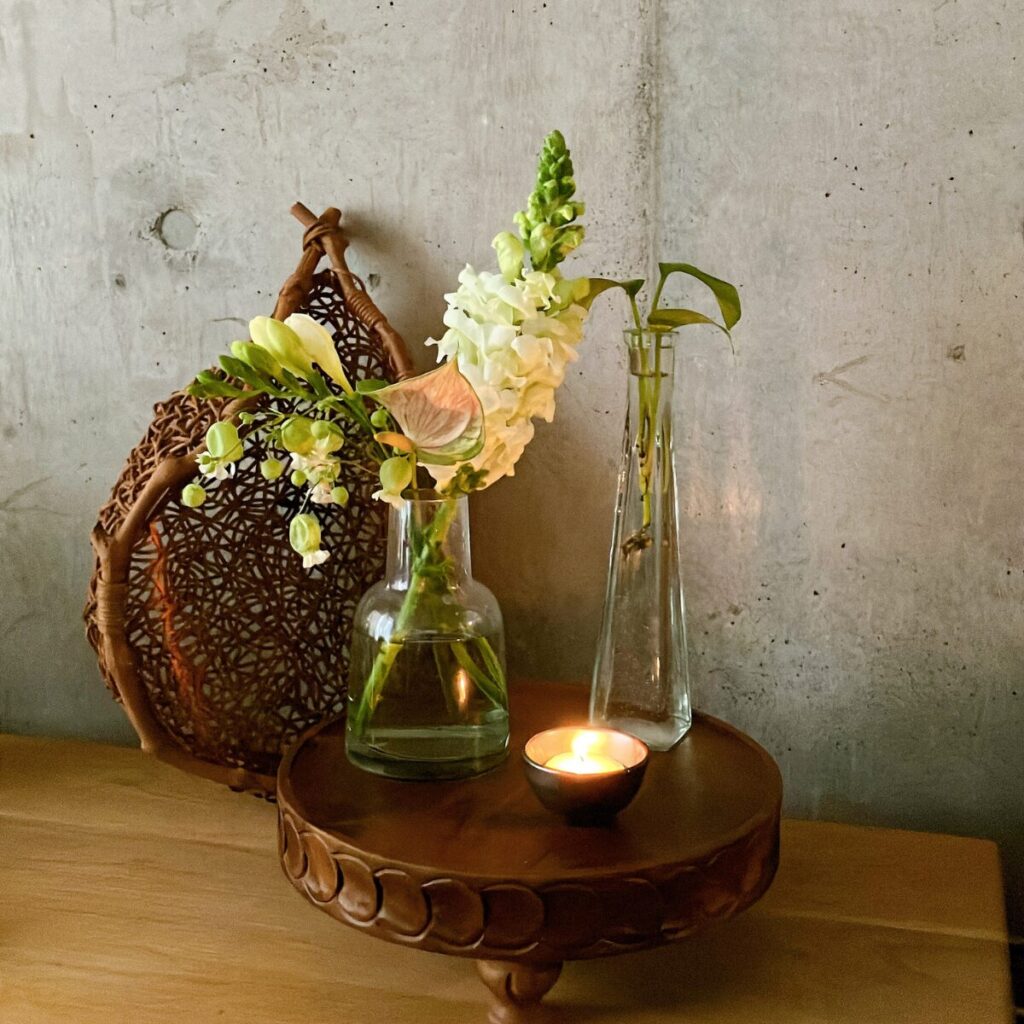
Style 5: Evening Calm with Candlelight
For the night scene, I limited the color palette to white and green.

By placing a slender vase of pothos alongside the white snapdragons, the greenery adds a sophisticated touch.
I feel this restrained range of colors is well-suited for the quiet of the night.
The candle’s glow highlights the textures of the leaves and petals against the akebia basket.
Items Used:
- Wooden compote
- Ochoko sake cup as a candle holder
- Glass vase
- Slender glass vase with Pothos
- Akebia basket for background
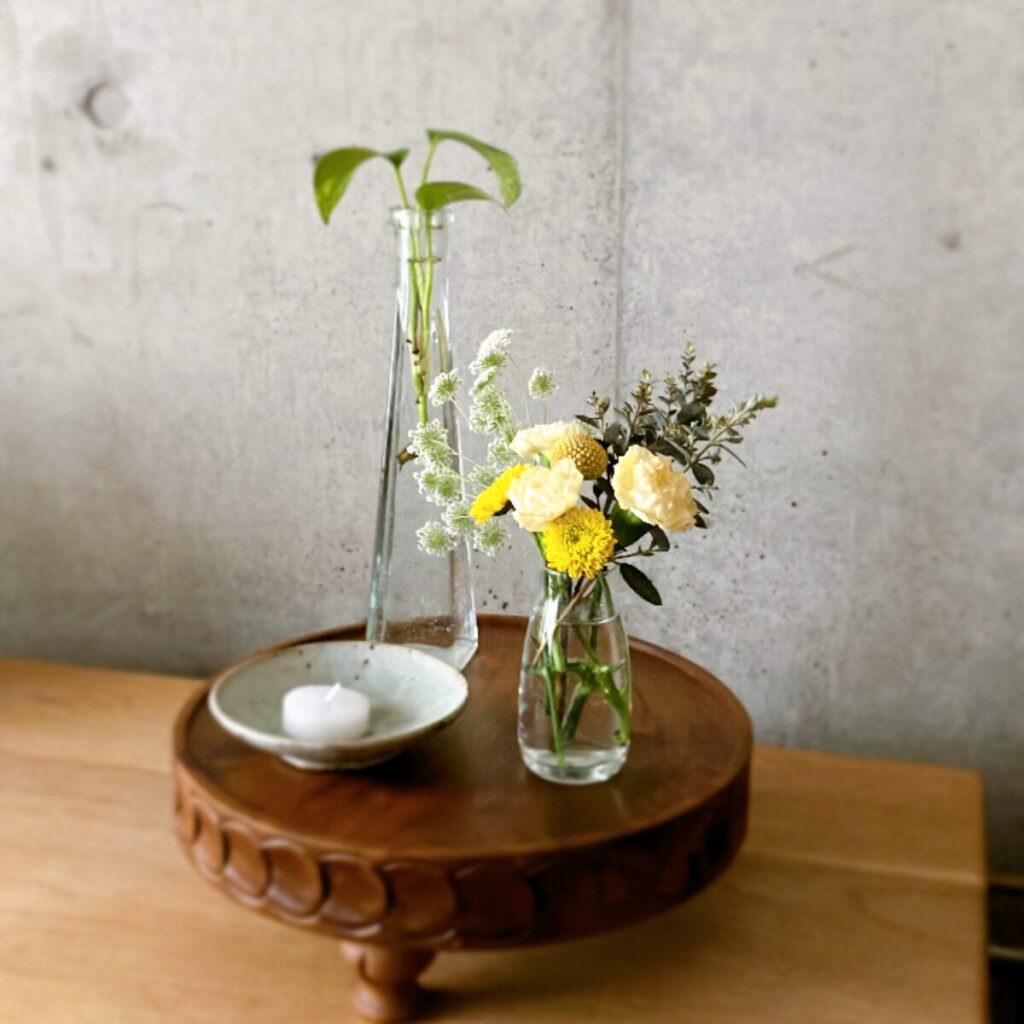
Variation: Affordable Greens and Restrained Bouquet

Another variation uses a simple 100-yen glass vase for tall pothos in the background.
In the foreground, I placed a low candle and a small bouquet of white and yellow flowers.
Even with affordable items and plant cuttings, limiting the color palette keeps the look sophisticated.
It’s a reminder that balance and color choice matter more than the price of the tools.
Conclusion
Playing around with these five styles helped me figure out my own way of blending "Wa-Yo" (Japanese and Western) elements.
It was all about finding that sweet spot where a traditional akebia basket meets a modern champagne glass or even a simple 100-yen jar.
There’s no strict rule—just the fun of moving things around until it feels right.
I hope this look into my process encourages you to experiment with your own favorite pieces and find a balance that’s uniquely yours.
Records of styling with Japanese elements only