Lupinus has a bold, unique silhouette that really commands the room. Because of its tall, striking shape and vibrant color, I initially found it hard to imagine how to pair it with other flowers without it taking over the whole arrangement.
During a recent visit to my mother’s house, we experimented with a bunch of blue Lupinus I found at a local supermarket. By integrating them with traditional Japanese ceramics and everyday items, we found ways to soften their strong character while still highlighting their natural beauty.
The "Double-Vase" Hack with a Soba-Tsuyu Pitcher
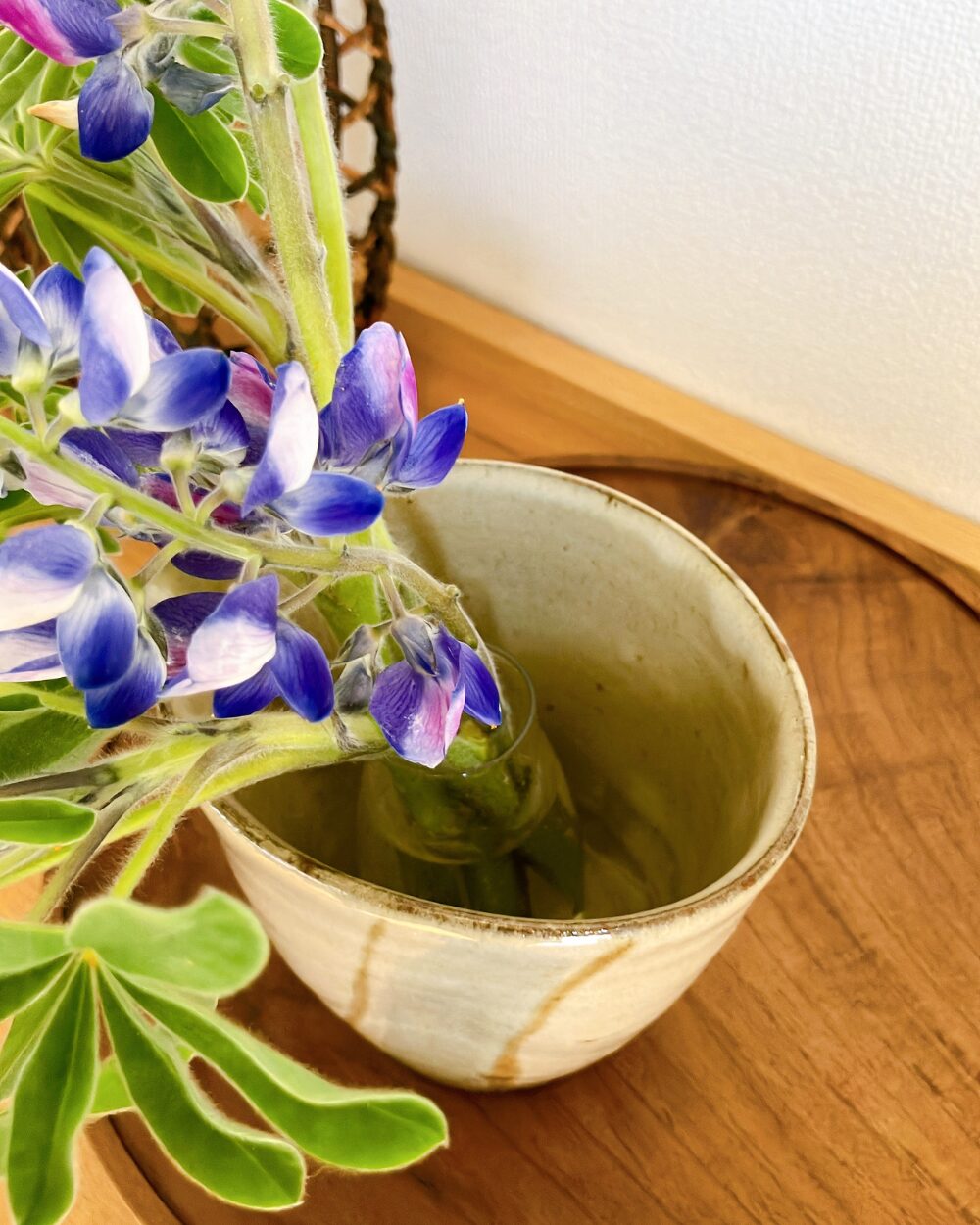
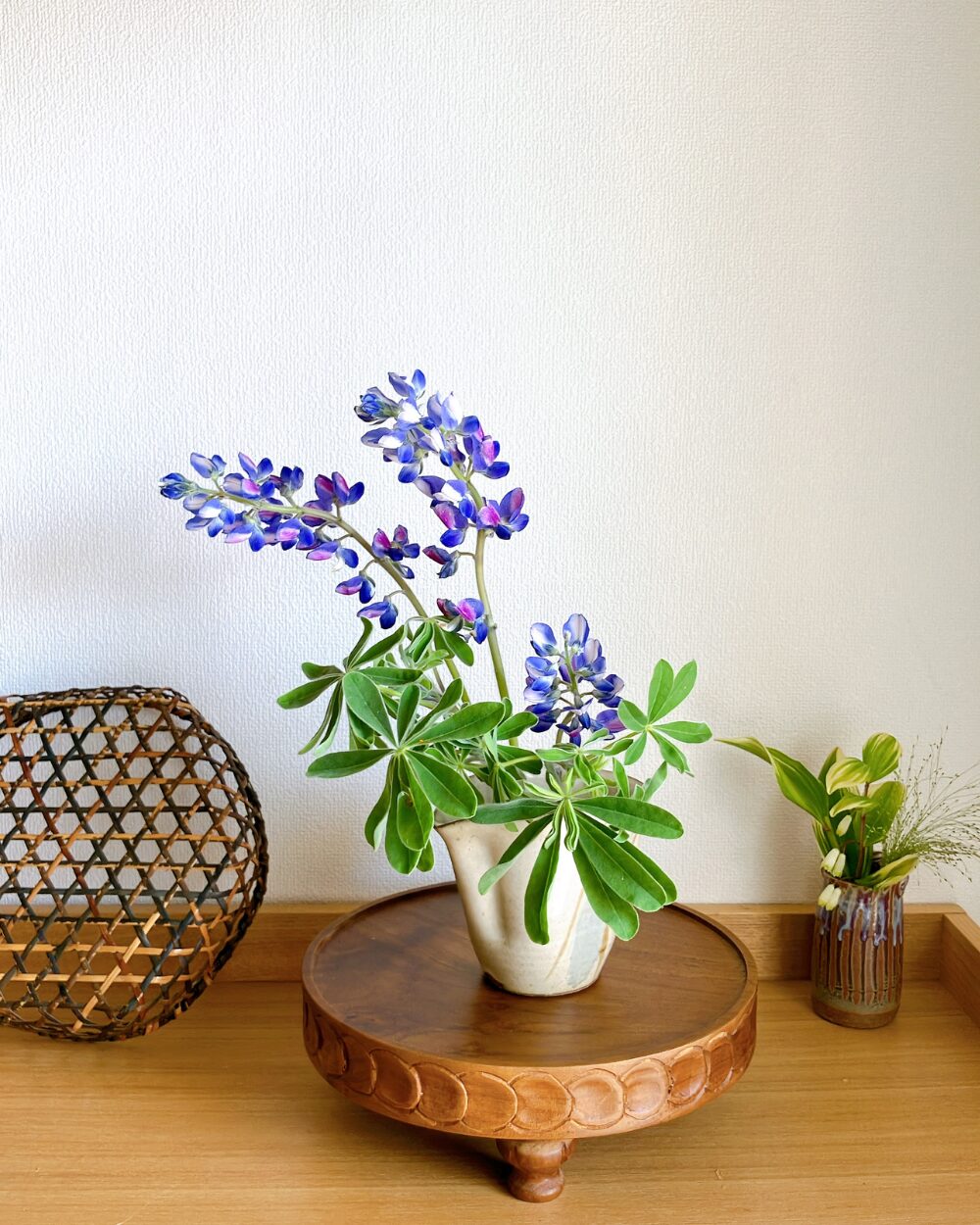
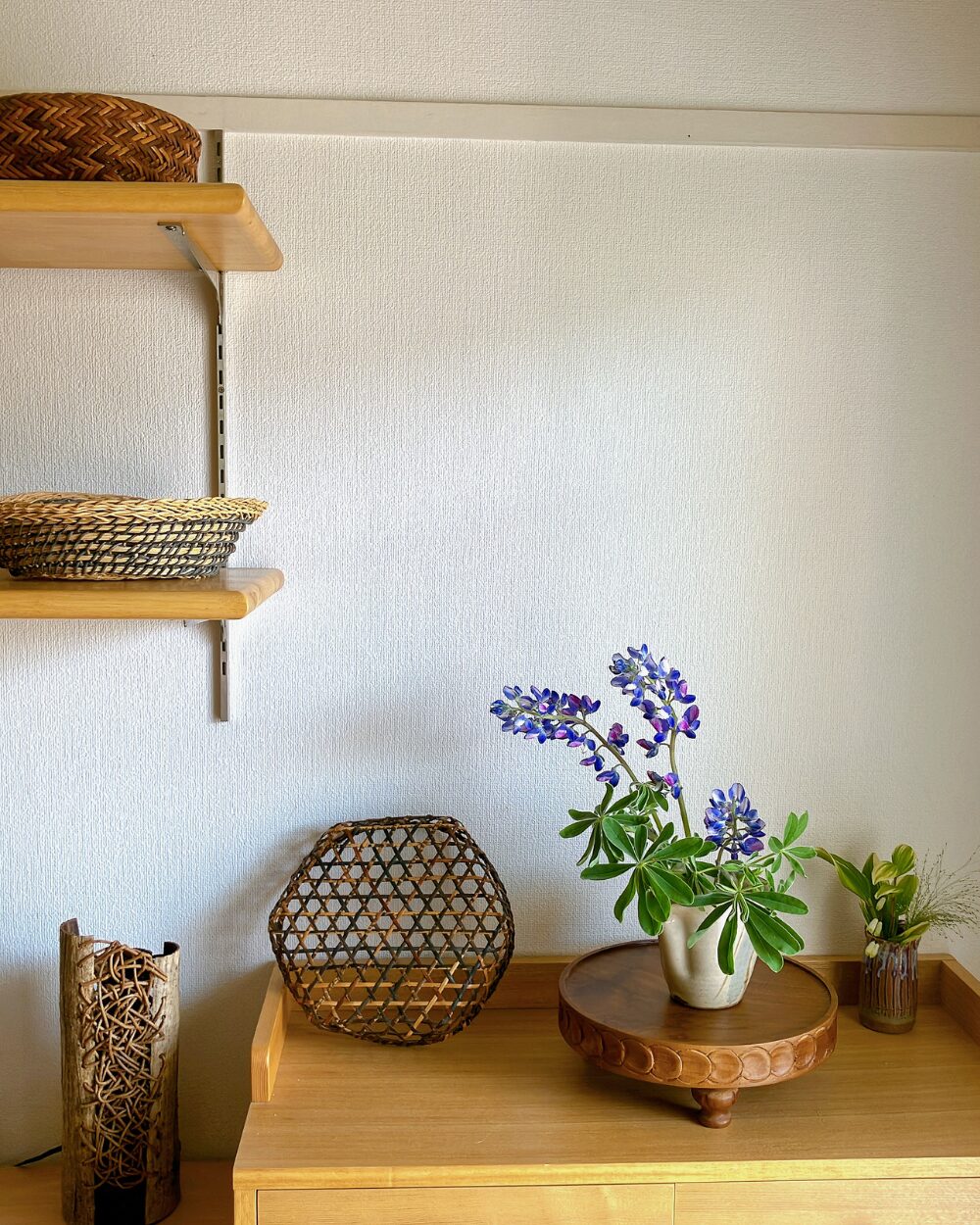
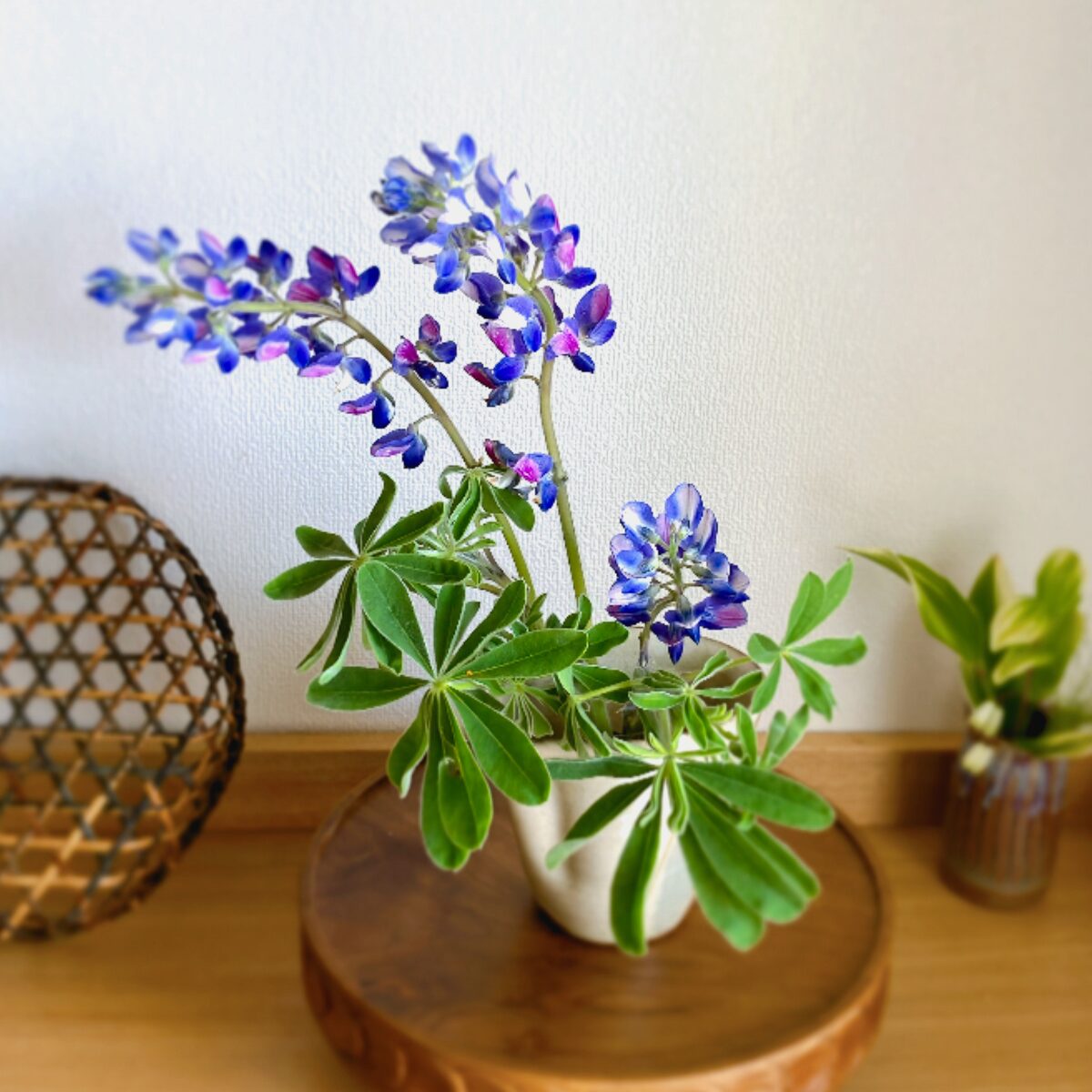
Our first approach focuses on the flower's height. We selected a Soba-Tsuyu-ire—a ceramic pitcher traditionally used for noodle dipping sauce. Its earthy texture and deep tones provide a calm, sophisticated backdrop for the blue blooms.
Since Lupinus has heavy, straight stems, they tend to wobble in a wide-mouthed pitcher. To fix this, we used a simple "double-vase" technique: hiding a small, slim glass vase inside the ceramic pitcher to act as a support. This keeps the three stems standing perfectly upright. Placing the pitcher on a wooden compote gives the arrangement a bit of extra height, making it feel more like a piece of art than just a bouquet in a kitchen.
To balance out that strong vertical energy, we styled the space with a woven basket and other Japanese pottery. Mixing natural materials like wood and clay is an easy way to help a bold flower like Lupinus feel right at home in a Japandi-style interior.
A Rustic Meadow: Blending Textures and Tones
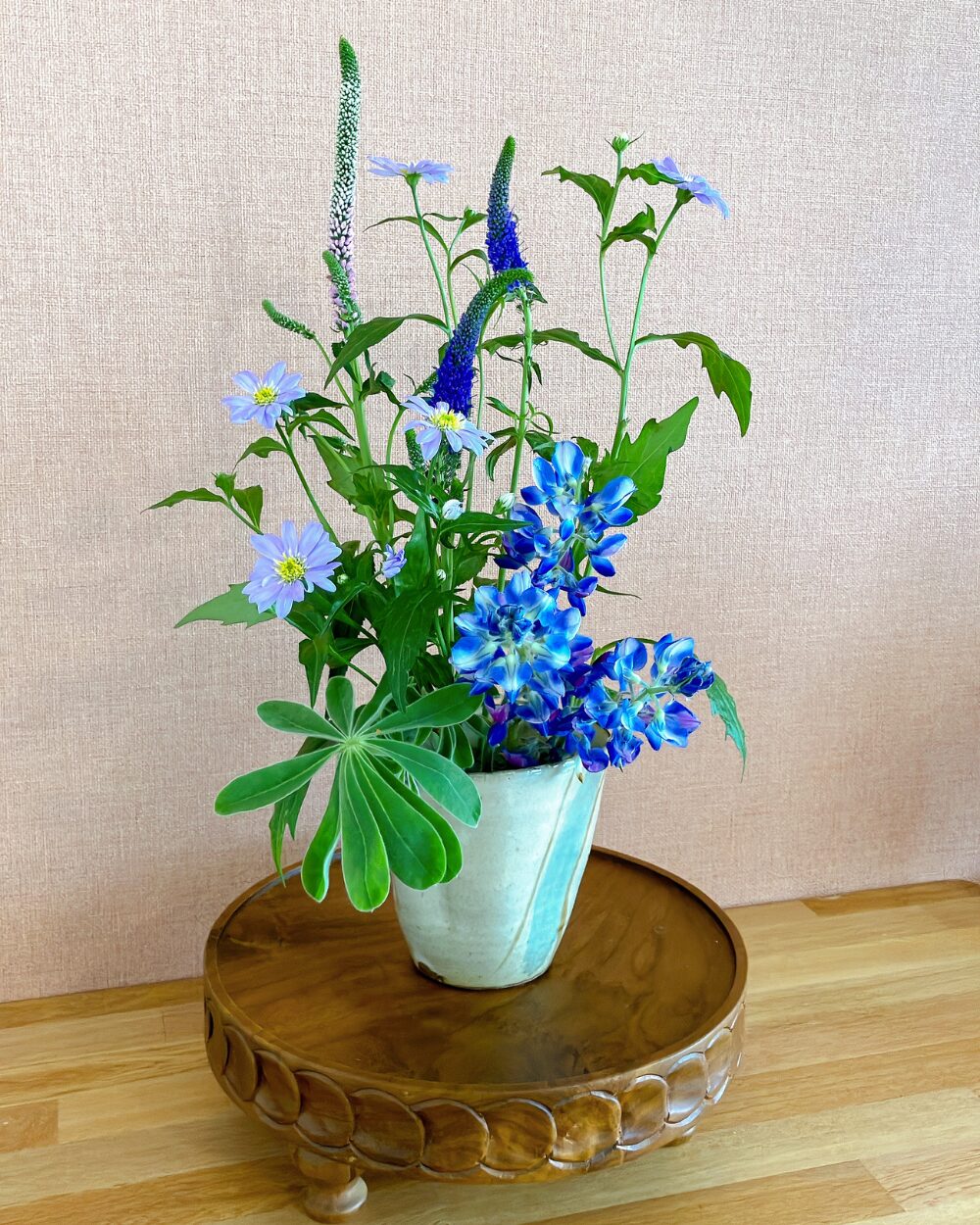
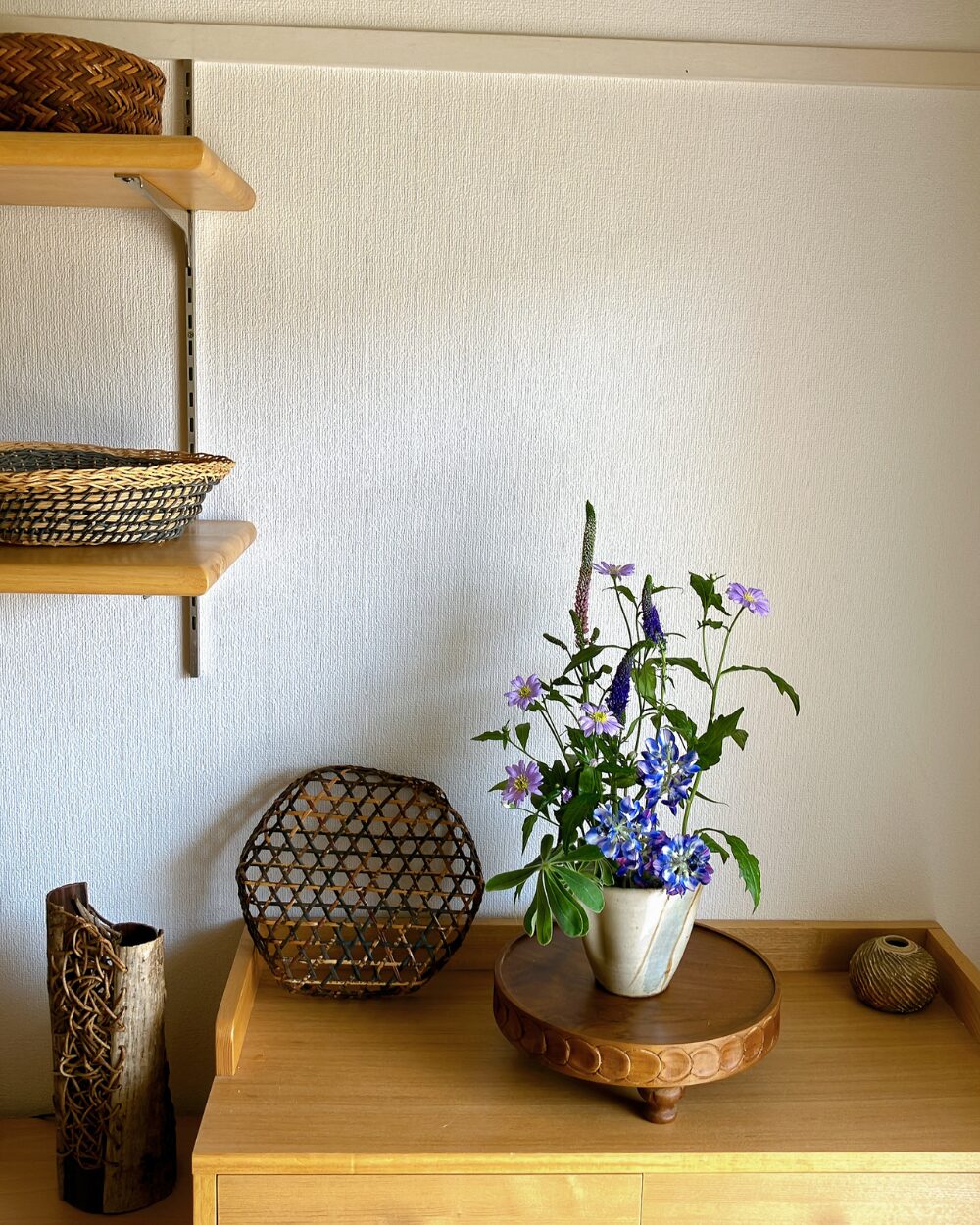
For the second style, the goal was to make the Lupinus feel more relaxed, almost like it was still in a meadow. To do this, we surrounded its sharp lines with softer, more varied textures.
Along with the Lupinus, we tucked in purple blossoms from a friend’s garden and some simple stems from the supermarket. By sticking to a cool palette of blues and greens, the whole thing feels natural and effortless. This style really showed me that even a flower with a big personality can find harmony when it’s surrounded by the right greenery.
This rustic composition brings the fresh, wild feel of early summer indoors. The contrast between the bright blue and the deep green creates a focal point that is both lively and calming at the same time.
Modern Ikebana: Defining Space with Shallow Vessels
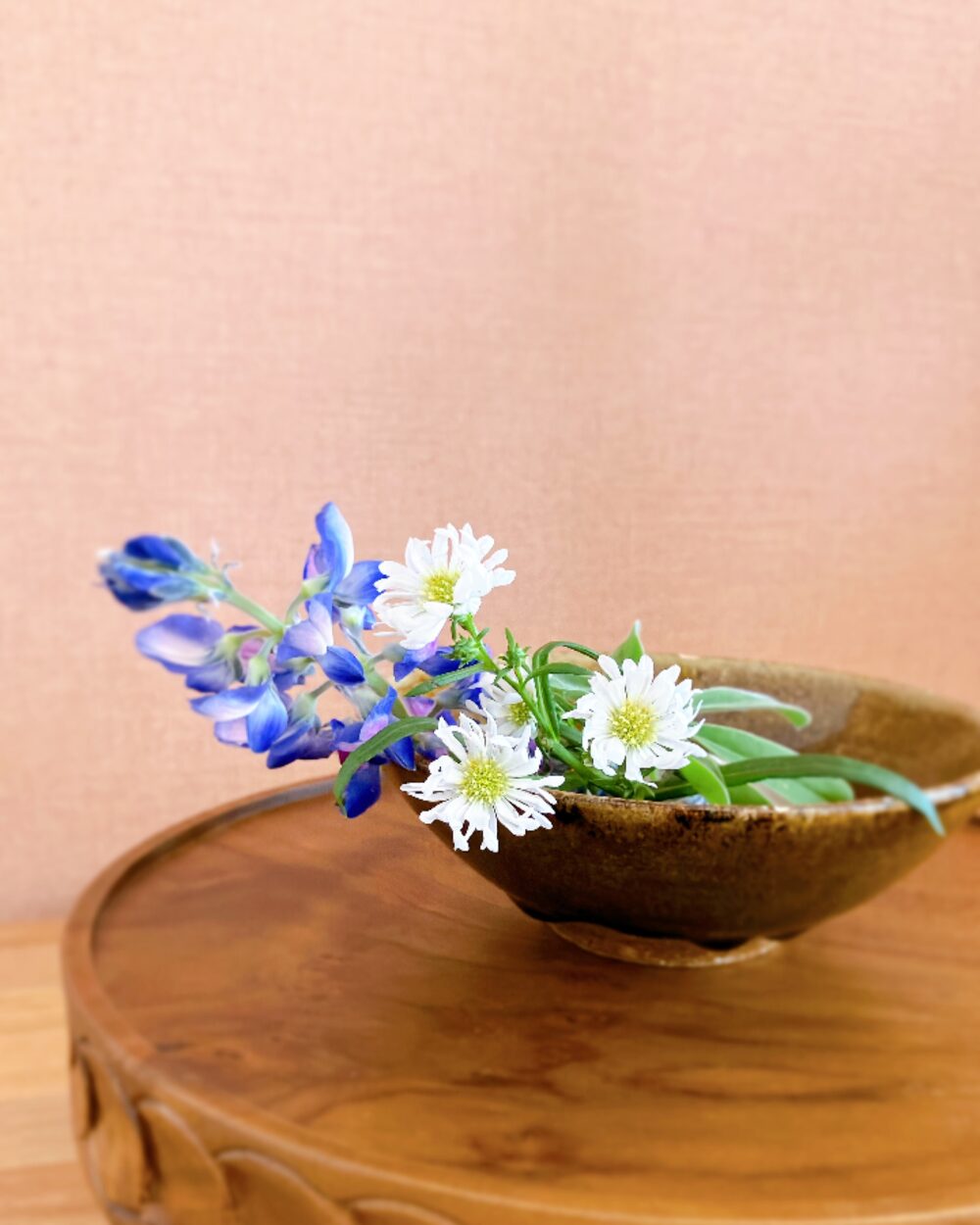
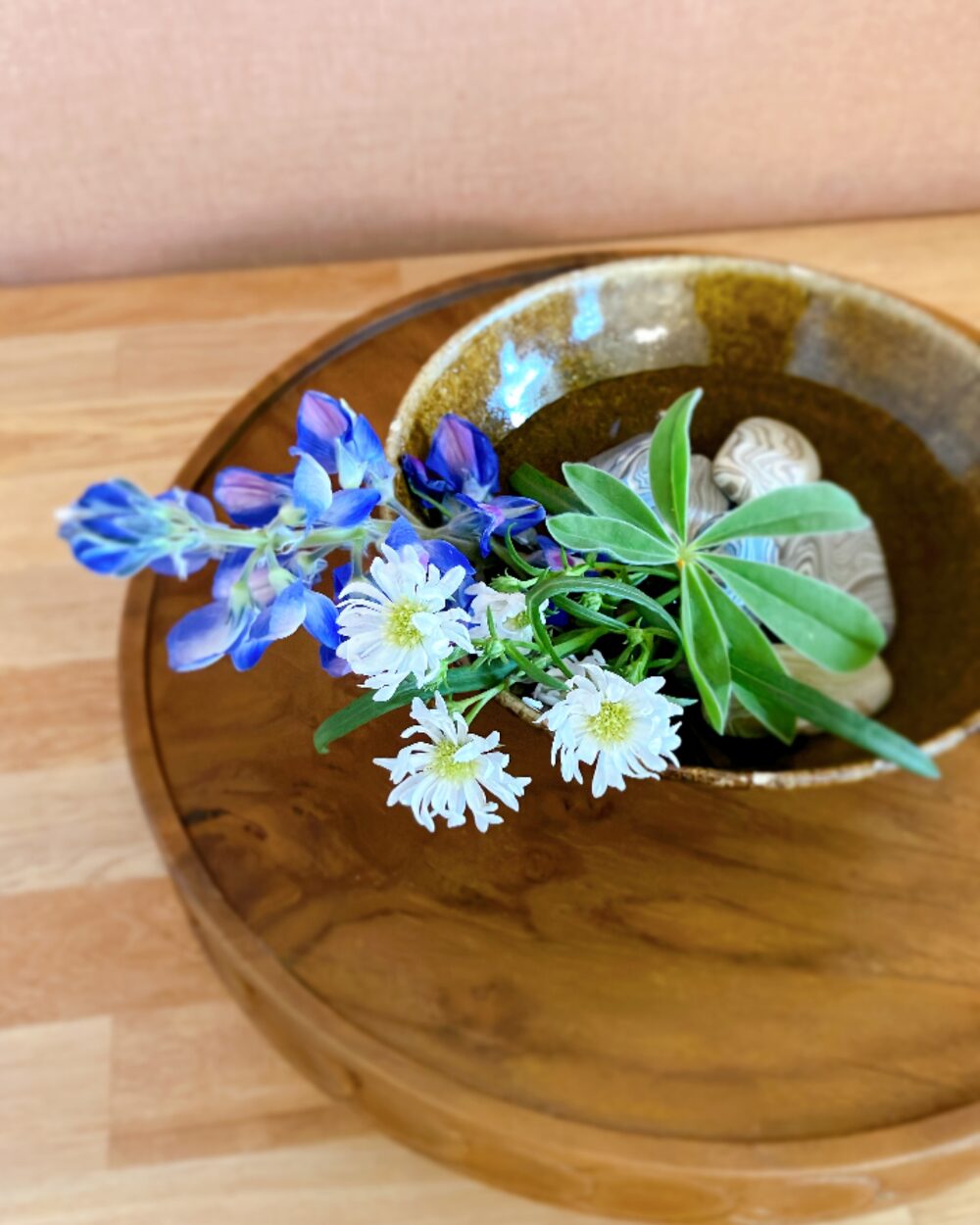
The final approach uses a shallow Kasama-yaki dish to play with negative space.
We used ceramic chopstick rests that look like natural stones as decorative weights. These "stones" keep the Lupinus and small white flowers perfectly in place. It’s a bit like a modern take on Ikebana, where the tools you use to hold the flowers become part of the beauty. From above, the texture of the stones adds another layer of interest to the minimalist display.
Finding Stillness in the Process
As we head into the warmer days of early summer, the cool, serene blue of the Lupinus is a welcome sight. The whole process—the trial and error, the chatting with my mother, the testing of different vessels—is a ritual that really helps me stay grounded.
Among the arrangements we explored, the meadow-inspired style is our personal favorite. Seeing the bold Lupinus blend so naturally with other blooms to create such a wild, unforced expression was a highlight of this experiment. It’s a reminder that by looking at our everyday items with a fresh eye, we can create our own small sanctuaries.
Outside the frame of these photos, however, my small apartment is currently in a bit of a mess. As the seasons shift, I began a simple wardrobe change, which somehow evolved into a full-scale decluttering session after rereading Marie Kondo’s book. Even when we try to be mindful, items tend to accumulate.
I am currently in the middle of a "Danshari" process, and things are quite hectic at the moment. If I manage to clear enough space and refresh my room, I look forward to capturing more photos in a quieter, refreshed setting.
Stay calm and enjoy your quiet moments.
-mizu