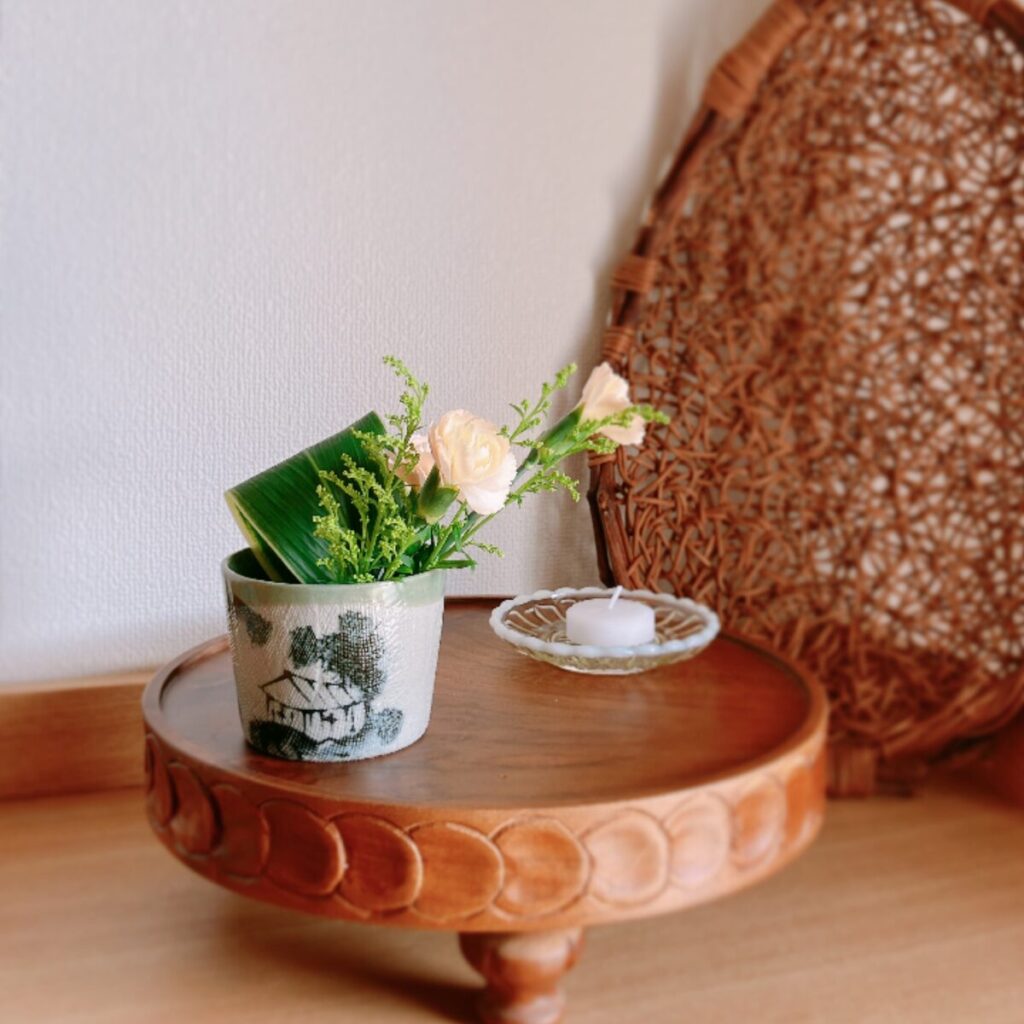

I’ve been styling a wooden compote (26cm diameter, 9cm high) to create a Japandi-inspired spring corner.
It’s a perfect "stage" for elevating everyday Japanese ceramics and giving them a fresh look.
Here are five ways I styled this little wooden stand—I hope these give you some inspiration for your own space.
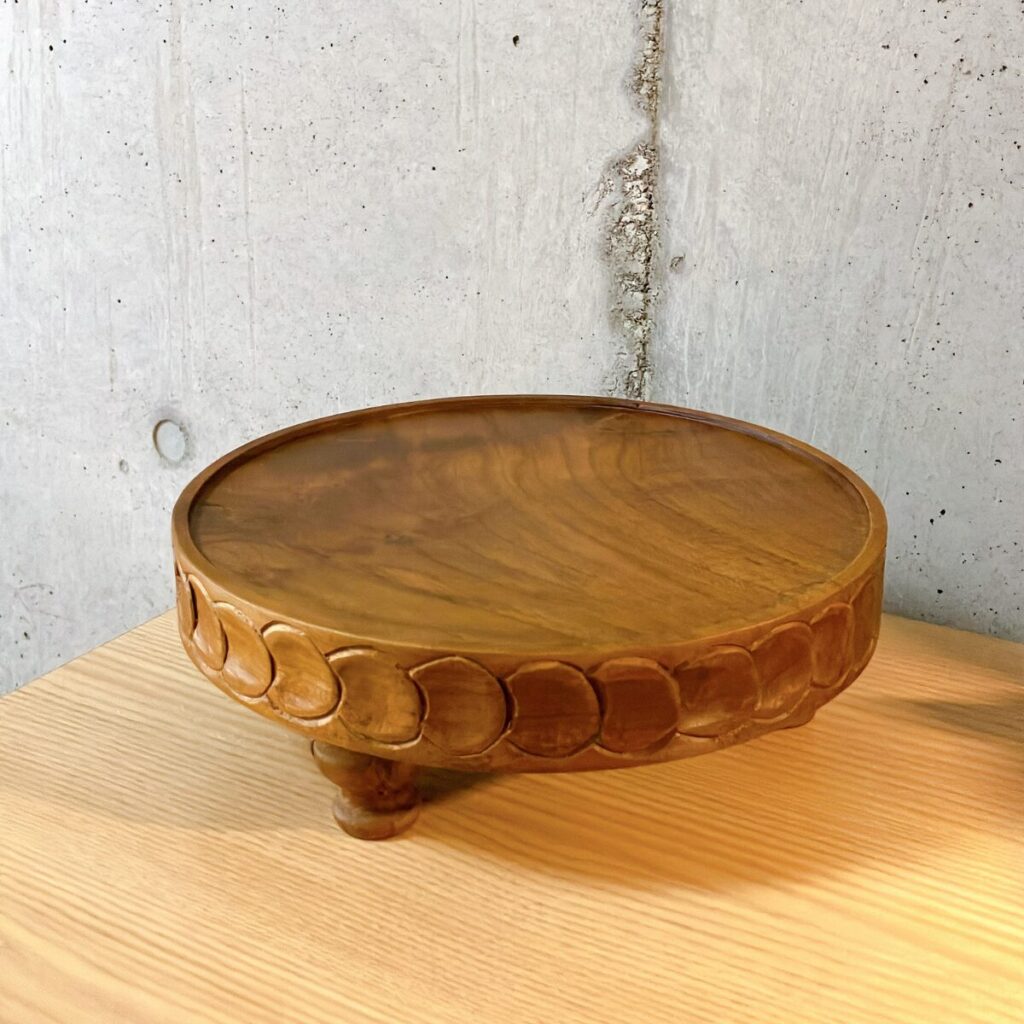
Style 1:The White Bowl and Candle
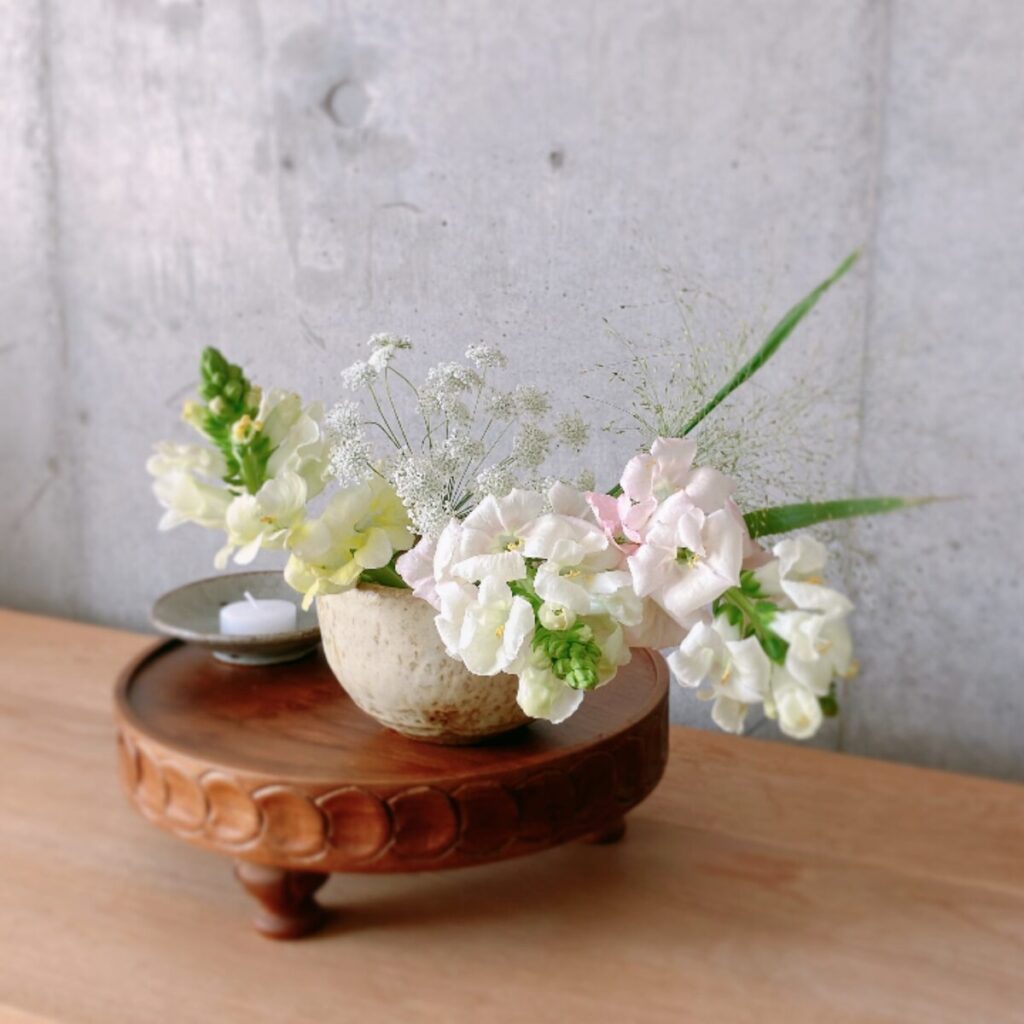
- Vessels: Ivory ceramic donburi (noodle bowl)
- Accents: Small candle on a dish
- Flowers: Snapdragons, laceflowers
The snapdragons are the main character here. Over the last few days, their color has softened into a beautiful, delicate white, so I paired them with laceflowers to lean into that fresh spring feeling. Using the ivory bowl helps the whole arrangement feel light and airy, exactly the mood I was going for.
Elevating it on the 9cm compote really helps those soft tones stand out beautifully against the wood.
I also tried replacing the candle with an Akebi basket in the background.
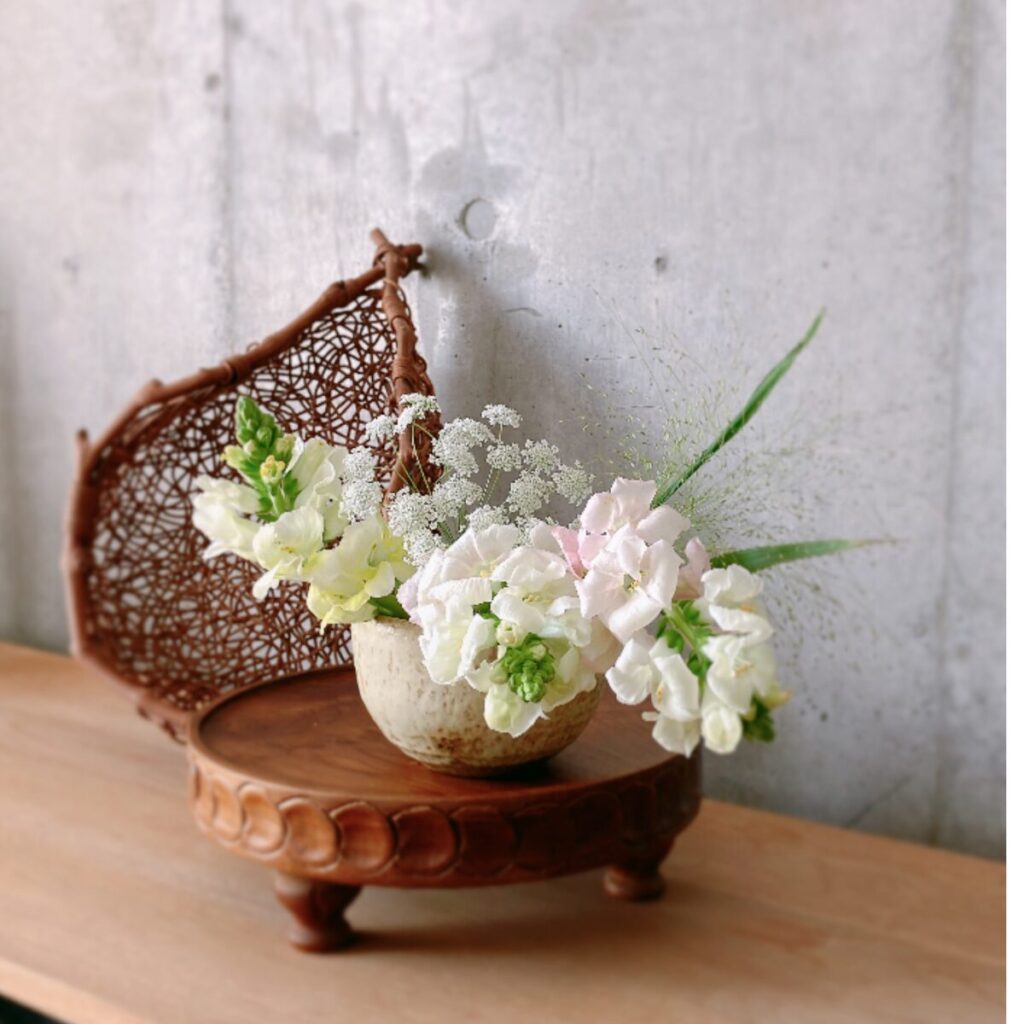
Since the basket is a similar tone to the wooden compote, it creates a sense of cohesion in the space, making the white flowers stand out even more.
Style 2: Vertical Rhythm with Tulips
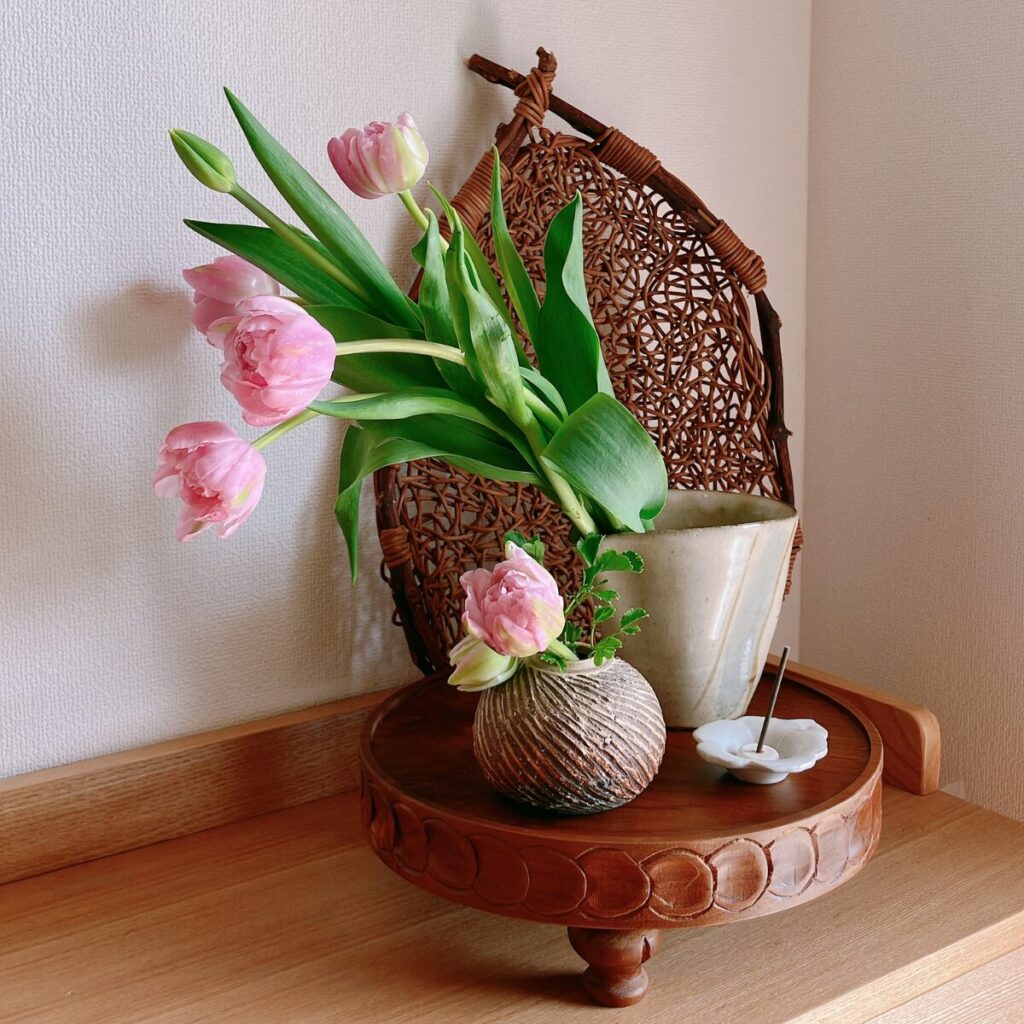
- Vessels: soba-tsuyu cup, small round ceramic vase, small plate
- Flowers: 4–5 long tulips, short tulip
- Accents: Incense on a bean dish, Akebi basket (background)
I tried using an 11cm tall soba-tsuyu cup to give the tulips some height.
To create a natural flow, I paired it with a single, much shorter tulip in a round vase, making sure they both faced the same direction.
Adding a small incense holder brings a subtle "lived-in" feel that grounds the whole scene.
Actually, these tulips are just standing naturally in the water.
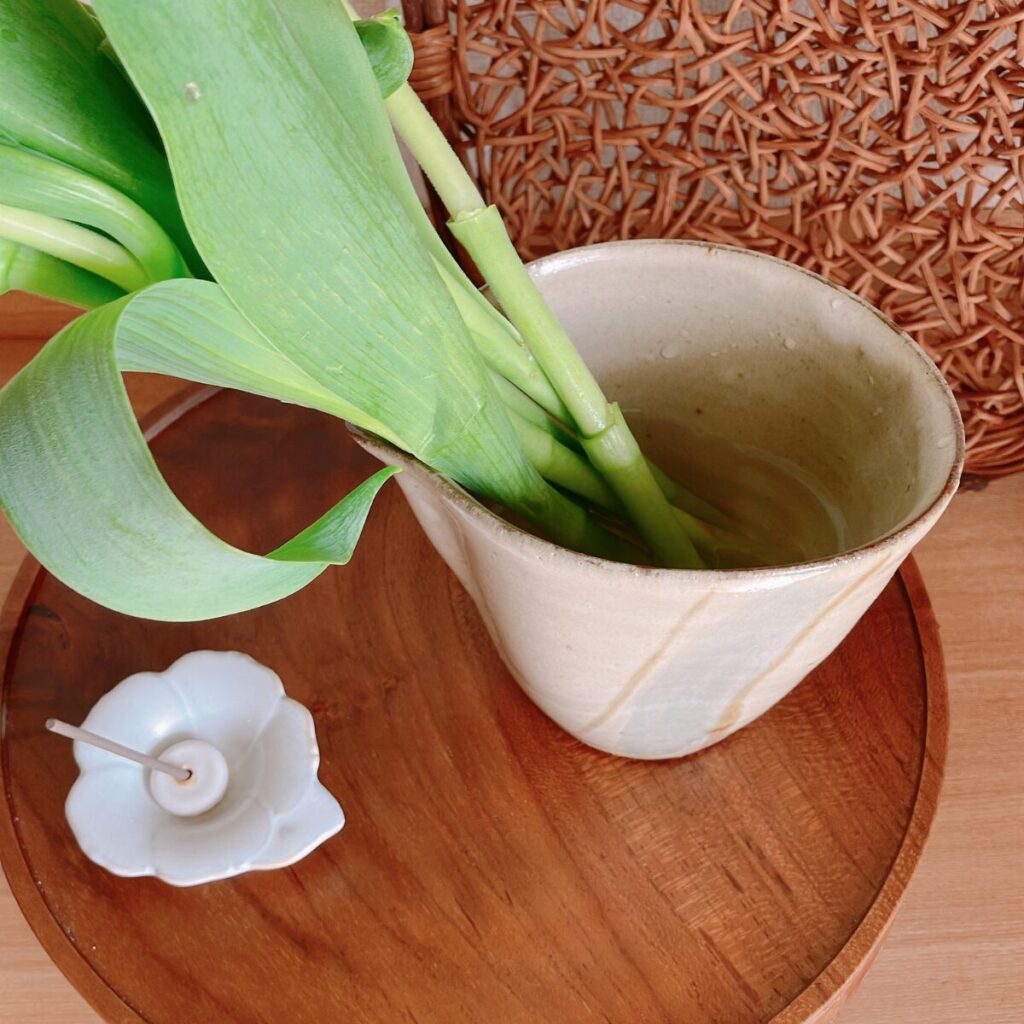
I didn’t use any floral foam or support; the cup itself is just deep enough to hold them.
I love how simple and honest it is.
Style 3: Monochromatic White with Textural Mix
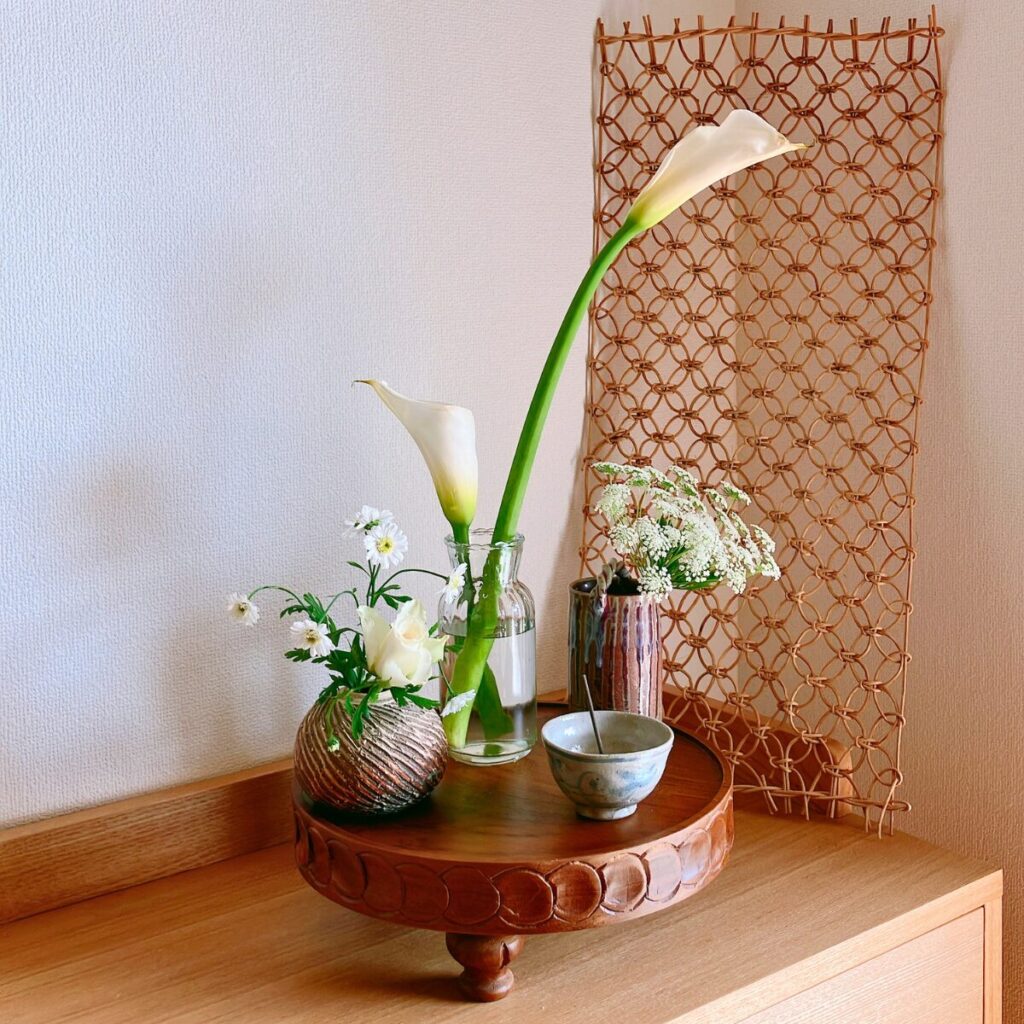
- Vessels: Round Kasama-yaki vase, tall glass vase, tall ceramic vase, sake cup
- Flowers: All white (Calla lilies, roses, etc.)
- Accents: Rattan woven piece (background), incense
I decided to unify the flowers in white for this styling, but I mixed three completely different types of vases on the wooden stage.
The highlight is the pair of Calla lilies in the center—by leaving one stem quite tall, it creates a sense of movement that opens up the space.
The rattan piece in the background is a bit lighter than the compote; its circular woven pattern adds a touch of playfulness and keeps the whole monochromatic look feeling bright and fresh for spring.
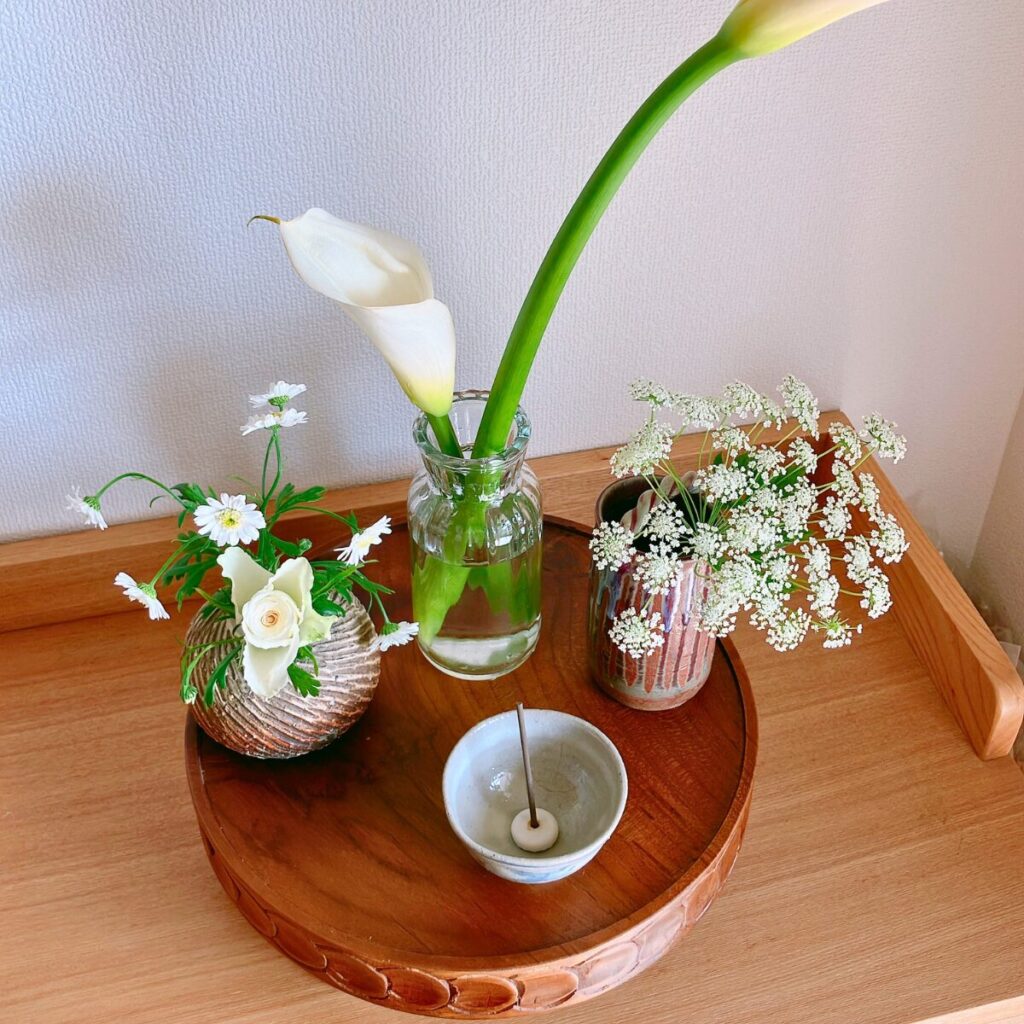
Actually, mixing heavy ceramic with clear glass is one of my favorite ways to add depth to a small space.
It keeps the "white-on-white" look from feeling too flat.
Style 4: A Lively Collection of Five Small Cups
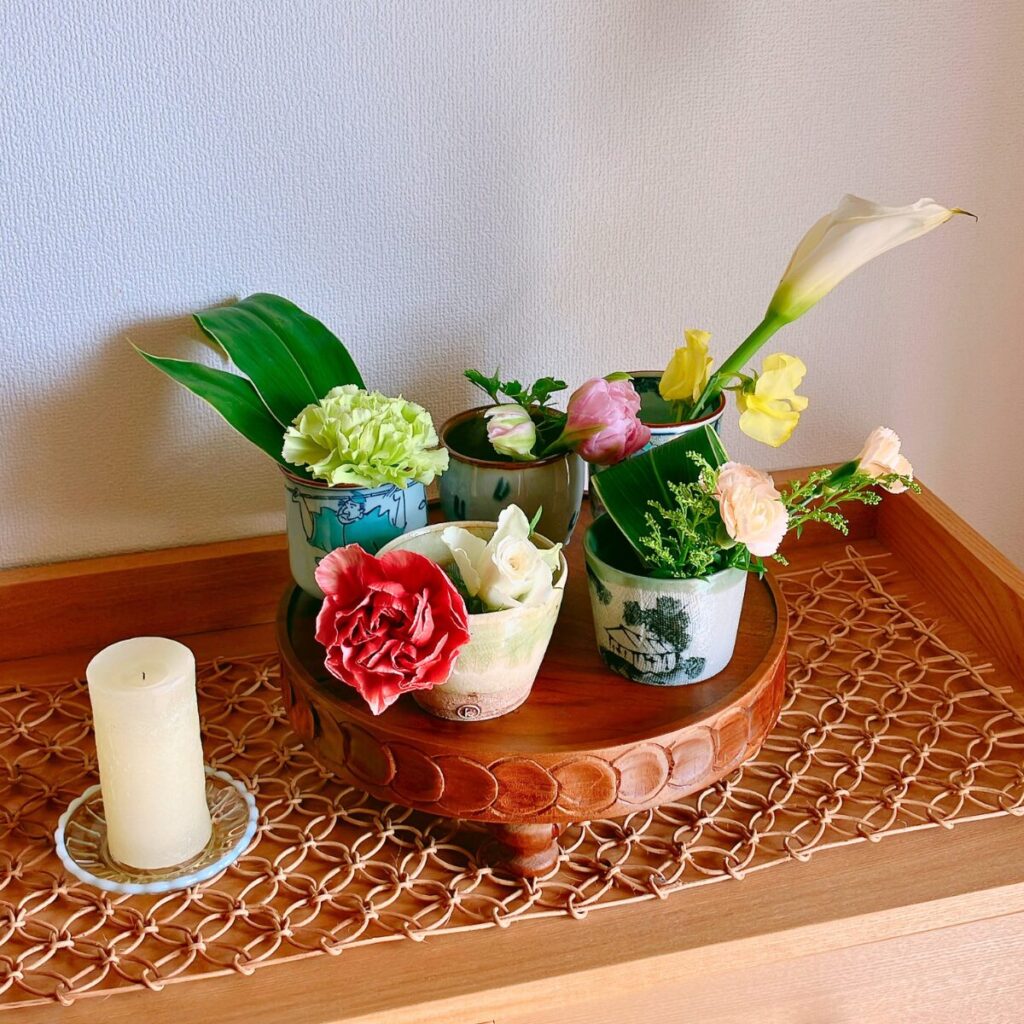
- Vessels: 3 tea cups (yunomi), 2 soba-choko
- Flowers: Various colorful blooms (small bunches of 2–3 stems each)
- Accents: Woven patterned mat (under the stand), candle on a glass dish (next to the stand)
I wanted to try something more lively and colorful for this setup.
I gathered five small vessels—three tea cups and two soba-choko—and gave each its own tiny floral arrangement of just two or three stems.
For a couple of these, I used small stones to fix the stems or rolled the Dracaena leaves to create a specific shape; it’s a simple trick to make tiny arrangements look more intentional.
(If you're looking for more inspiration on this, I’ve shared 10 ideas for styling a few flowers in Japanese ceramics [here].)
By placing a woven mat under the compote and adding a candle nearby, this group of small items feels like a single, cheerful story.
It’s definitely one of my favorite looks.
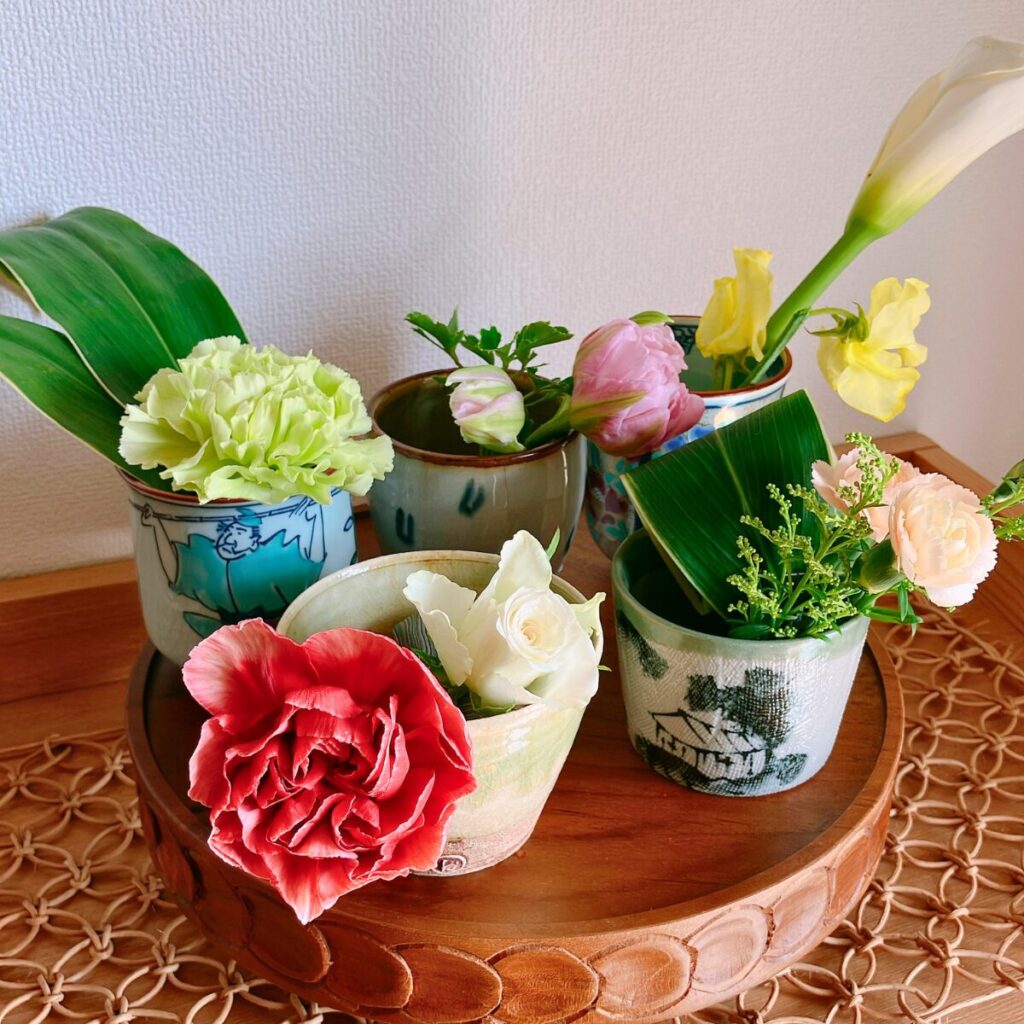
It’s so much fun to see how each little cup takes on its own personality with different colors.
Even the smallest leftover stems can look beautiful when you group them together like this.
Style 5: Expanding the Scene with a Large Vase
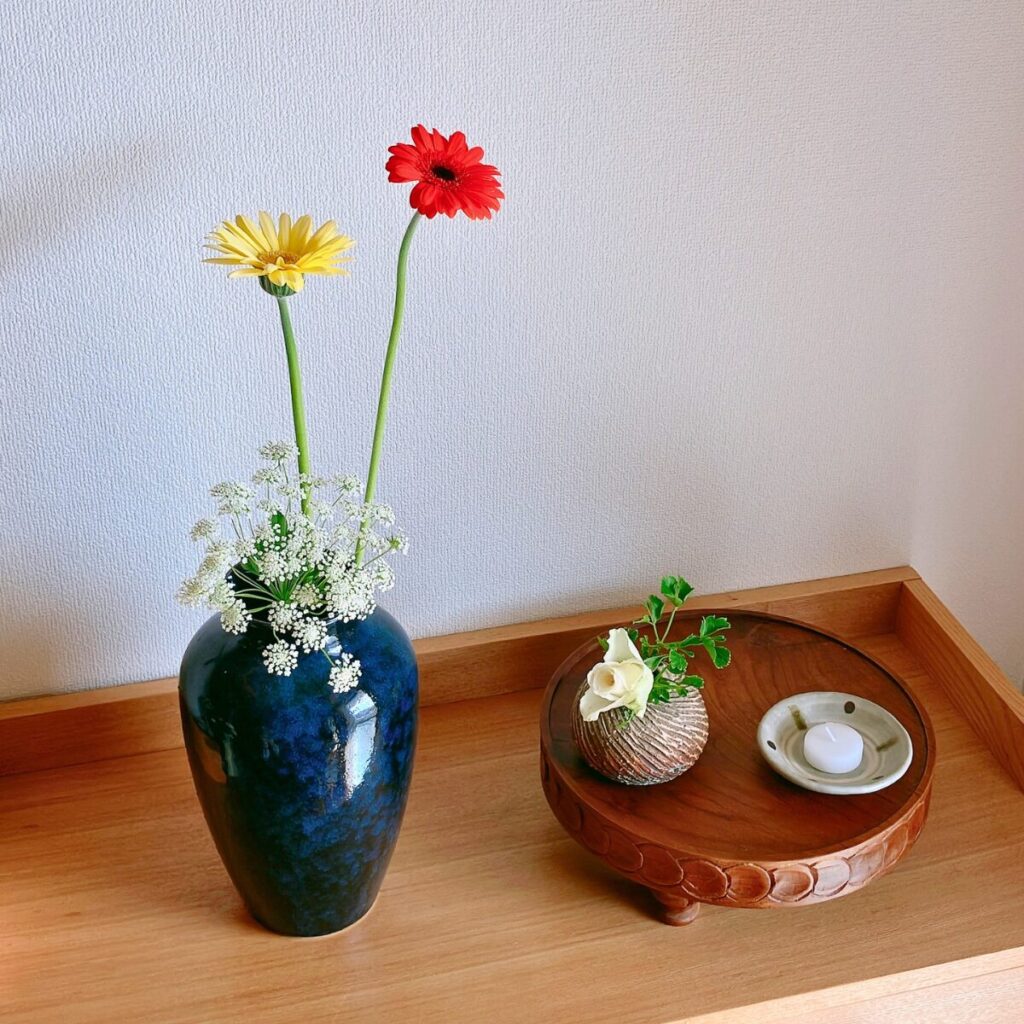
- Vessels: Large vase (next to the stand), small round ceramic vase (on the stand)
- Flowers: Yellow/orange gerberas, laceflowers, roses, greenery
- Accents: Low candle on a glass dish
For the final look, I decided to extend the arrangement beyond the wooden compote.
I placed a tall vase with gerberas and laceflowers right next to the stand, creating a bold height difference.
On the compote itself, I kept it simple with roses in a small round vase and a low candle.
This layout makes the whole tabletop feel like a larger, more dynamic spring landscape.
I also tried swapping the flowers—tall calla lilies in the large vase and tulips in the small one.
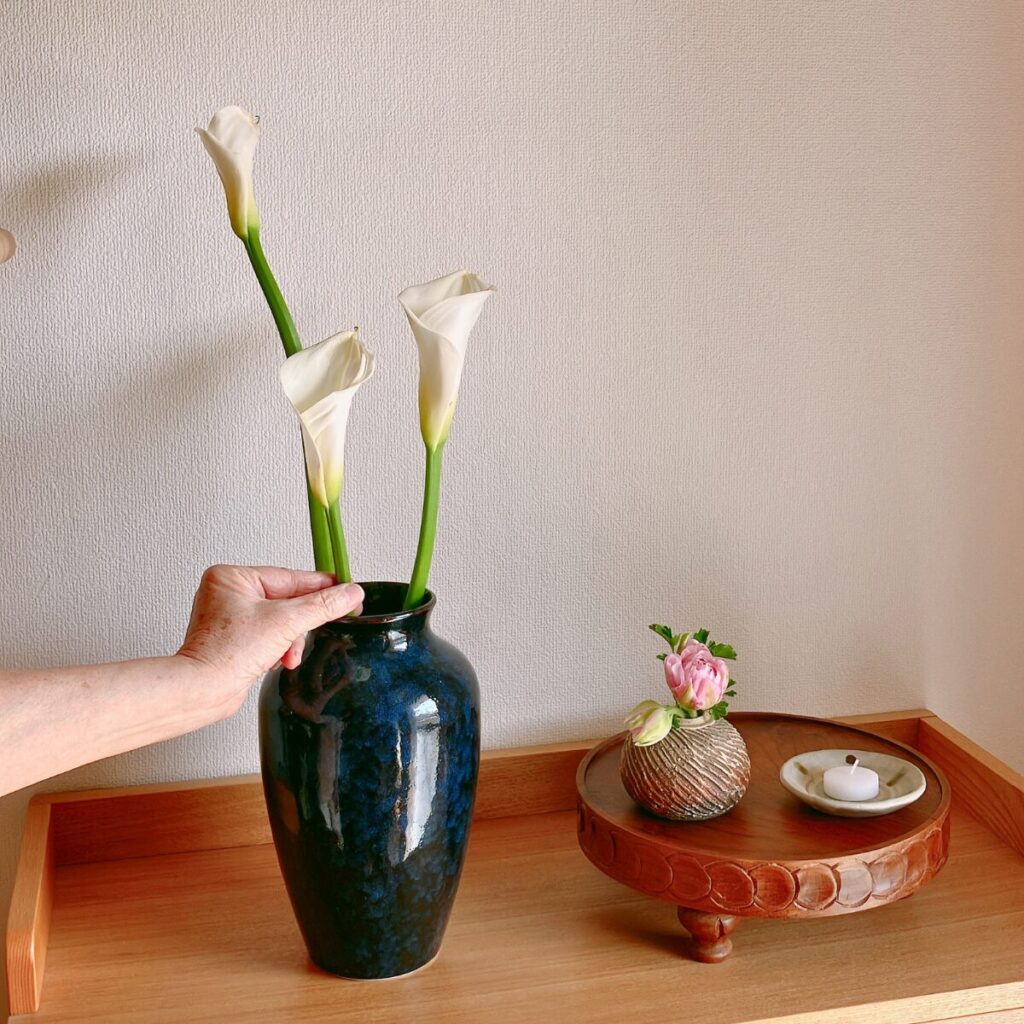
It’s interesting how just changing the shape of the flowers can shift the entire mood.
The clean lines of the calla lilies give the scene a more sleek, calm feel compared to the softer look of the gerberas.
Conclusion
Exploring these five styles with one wooden compote was a fun process.
It’s a simple way to give my everyday Japanese tableware a fresh perspective and create a small, seasonal sanctuary at home.
I hope these ideas help you find your own way to style a spring corner with the pieces you already love.
If you enjoyed these arrangements, you might also like my ideas for styling just a few flowers in Japanese ceramics.