
Spring often brings a desire for renewal, not just in nature but within the small corners of our homes. Lately, I’ve been fascinated by the interplay between the clear, airy transparency of glass and the grounded, earthy warmth of Japanese ceramics. Using a simple wooden compote as my stage, I spent an afternoon exploring how these "Wa" (Japanese) and "Yo" (Western) elements could coexist.
The Process of Layering: Height, Texture, and Light
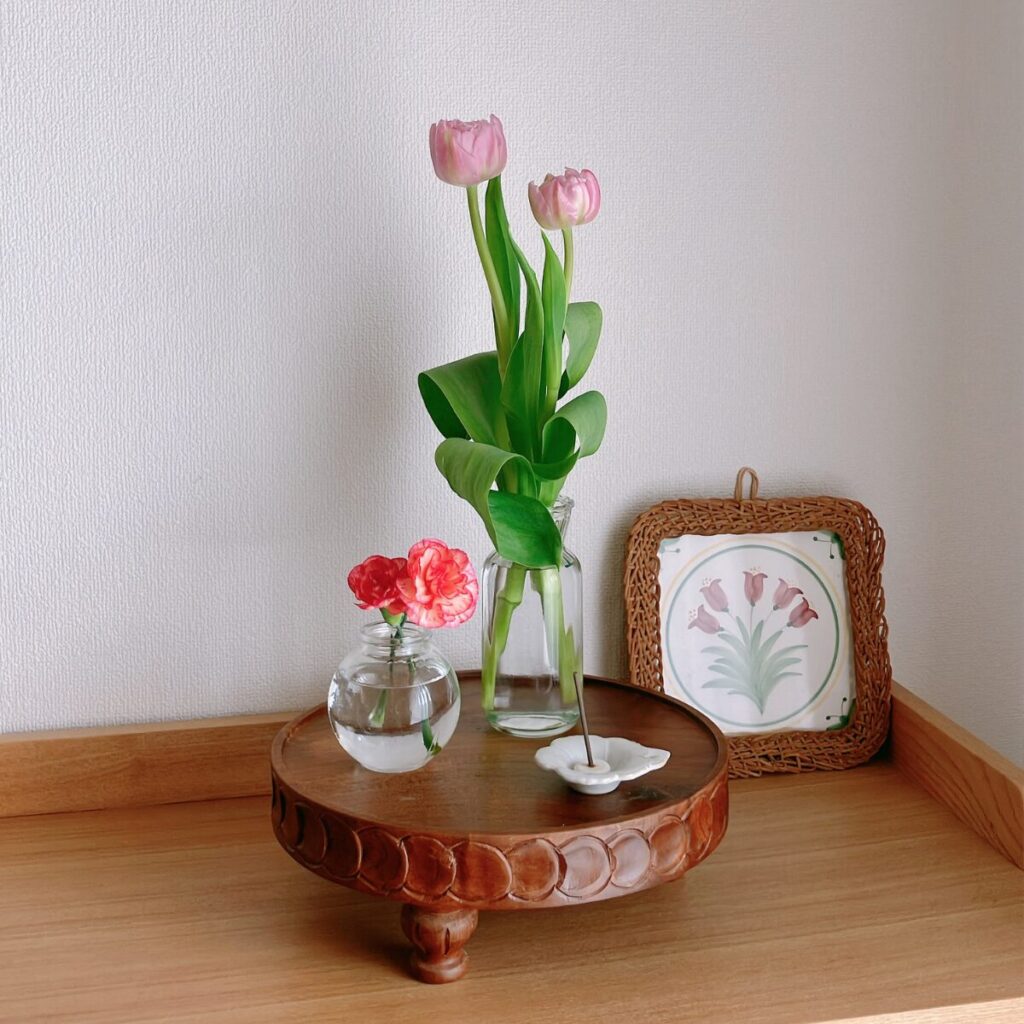
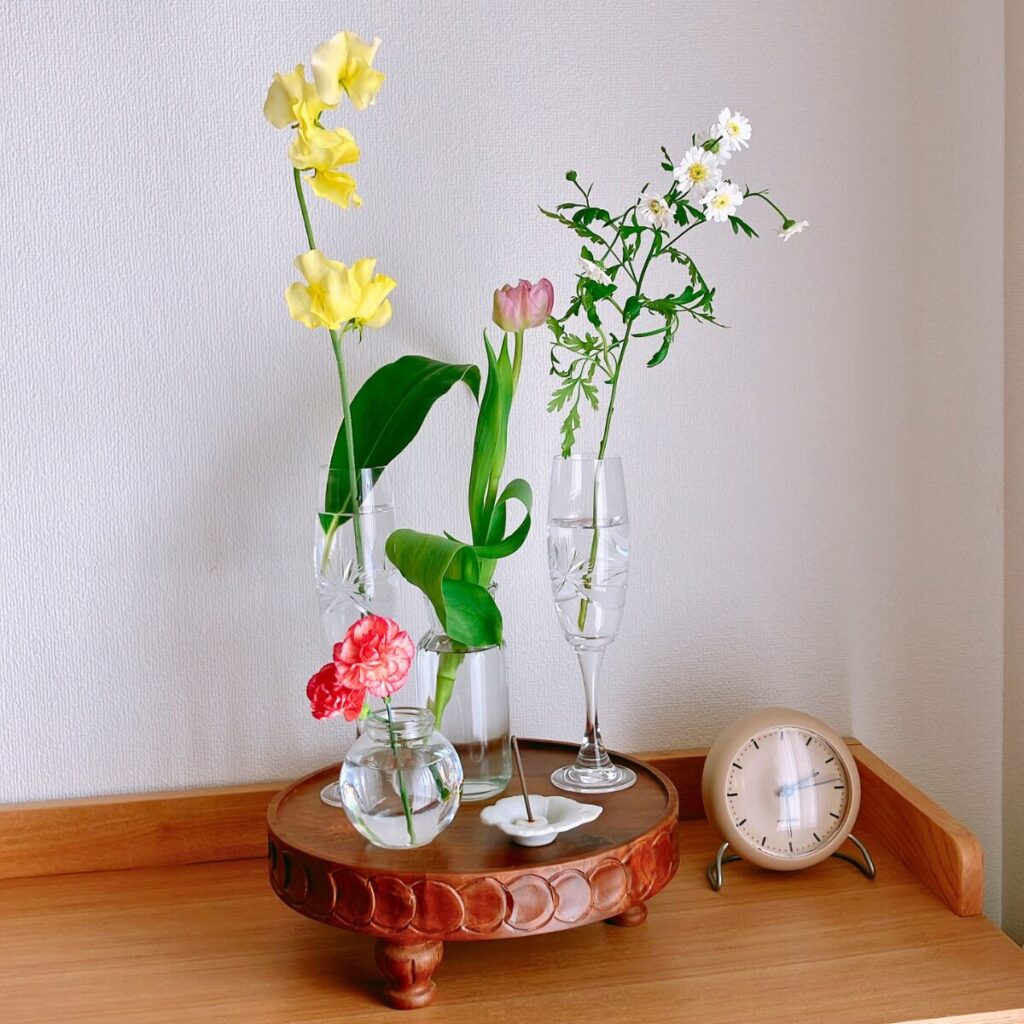
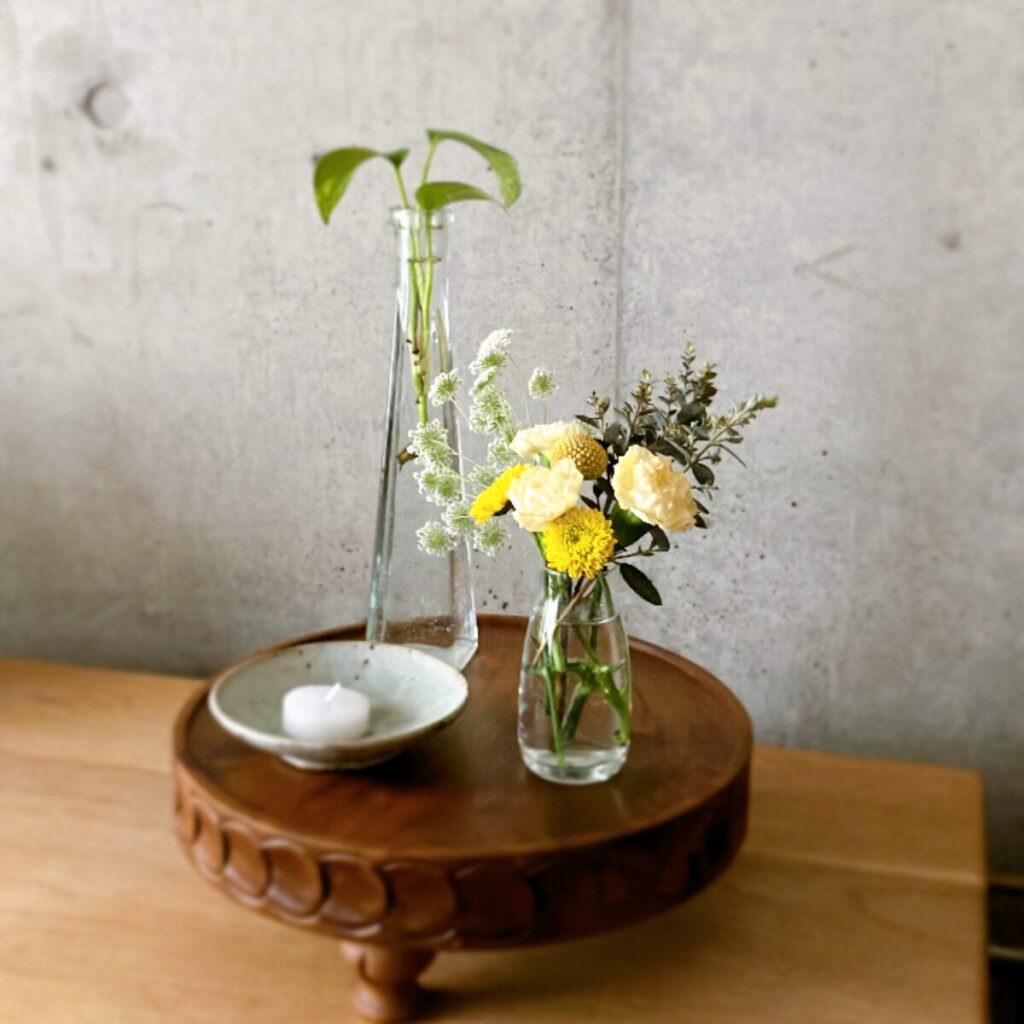
In these five scenes, I focused on the "rhythm" created by different materials. I began with the basics—focusing on height and the "breath" of the space using simple glass vases and a small Hanamame-zara plate as an anchor.
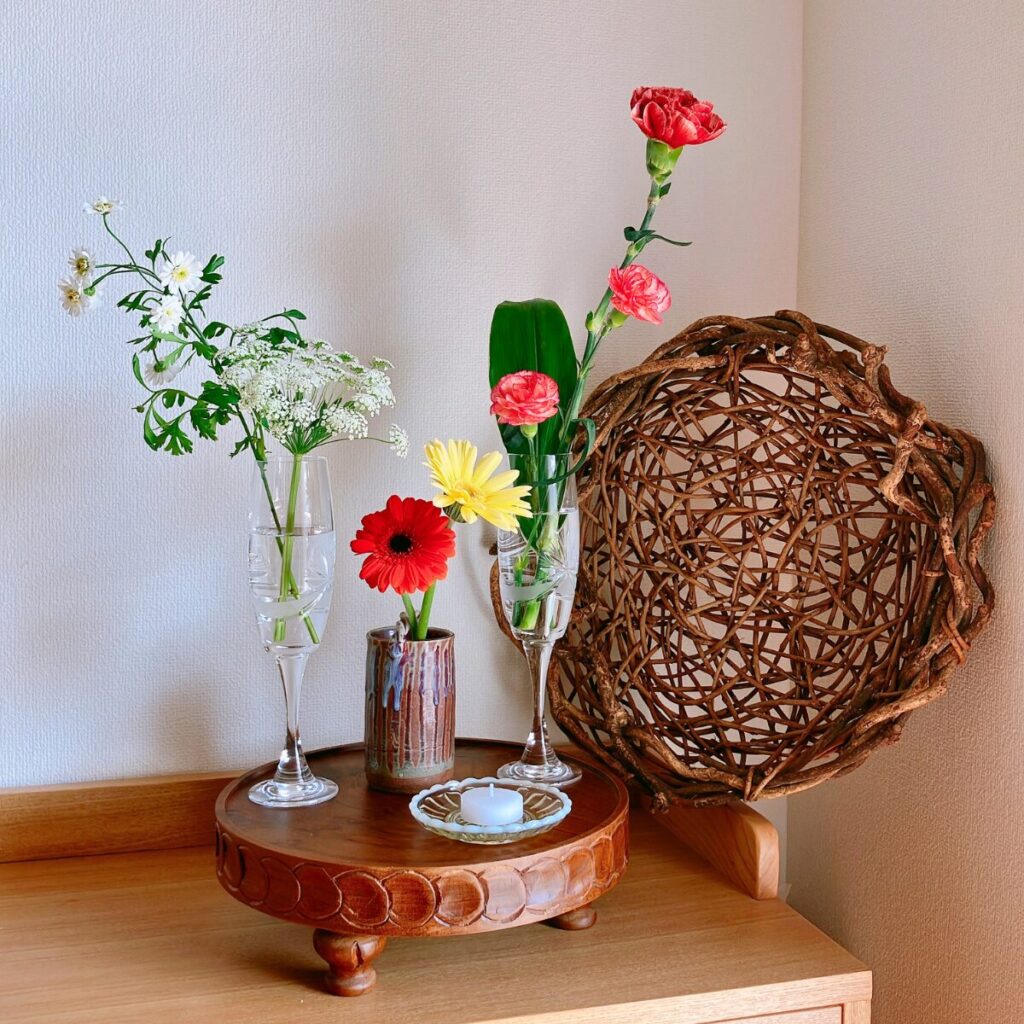
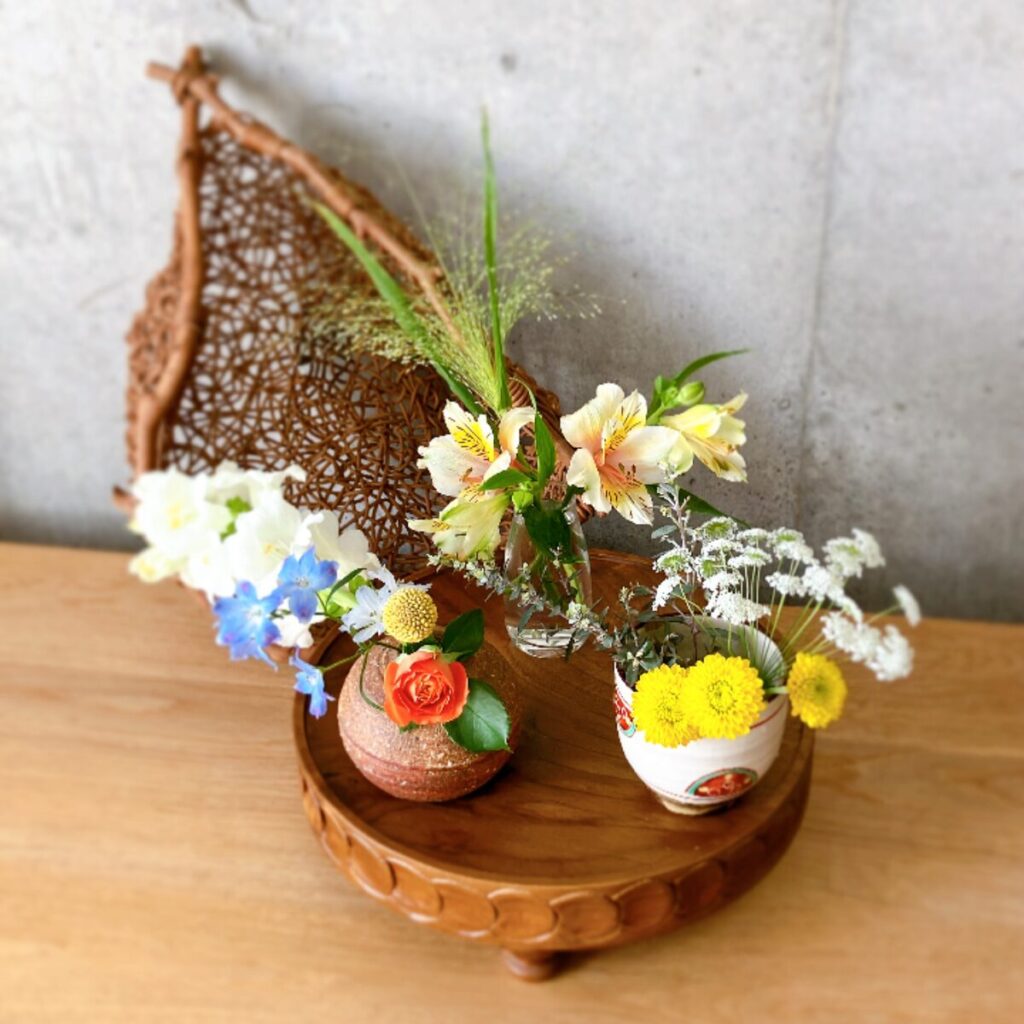
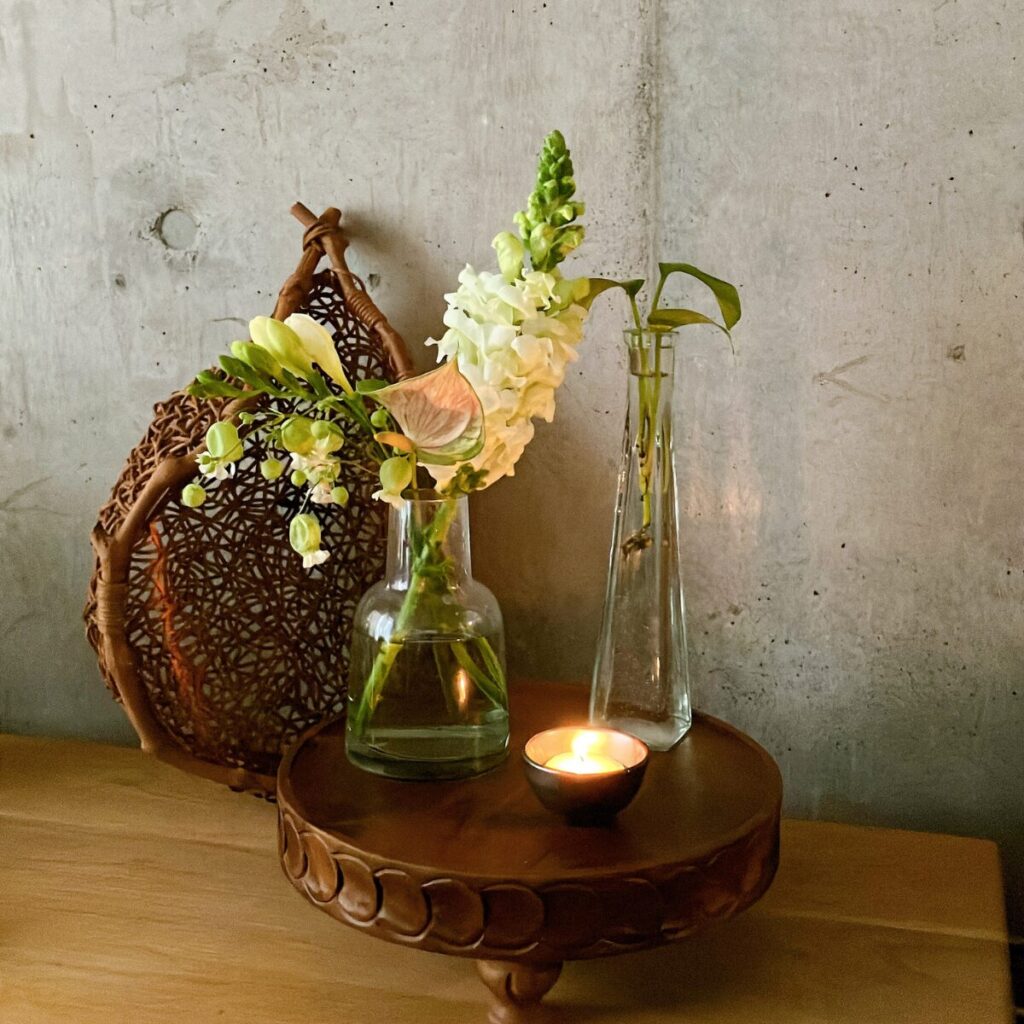
As I moved through the experiments, I played with transparency and density. Sometimes I kept it light with champagne glasses, and other times I intentionally went against the rules of minimalism, gathering Yunomi cups and Kasama-yaki vases at the same height to create a lush, cheerful energy. By introducing an Akebia basket in the background, I discovered how a bit of "solid" clay and woven vine can ground the "clear" glass, turning a simple corner into a composed interior scene. Even as evening arrived, a single candle and a restrained palette of white and green changed the mood once again, highlighting the textures I had carefully layered.
The Joy of Moving Things Around
Through these various scenes, I’ve discovered that there is no strict rule to blending Japanese and Western elements. Whether it’s a cherished piece of Kasama-yaki or a simple 100-yen jar, the real joy lies in the process—moving a vase just a few centimeters and watching how the light and balance shift.
It’s a reminder that we don't need to change everything to feel refreshed. Sometimes, just experimenting with the pieces we already love can turn an ordinary day into a series of special moments.
I hope this look into my process encourages you to experiment with your own favorite pieces and find a balance that’s uniquely yours.
-mizu