In the days leading up to Easter, the table was crowded with an abundance of flowers. I had Lisianthus, Lilies, and a new variety of Ranunculus called Lux. Having so many stems on hand provided a reason to experiment with some seasonal styling.
My mother, who has been practicing flower arrangement for over twenty years, handled the placement of the stems into floral foam, while I focused on the overall styling and the selection of the surrounding objects.
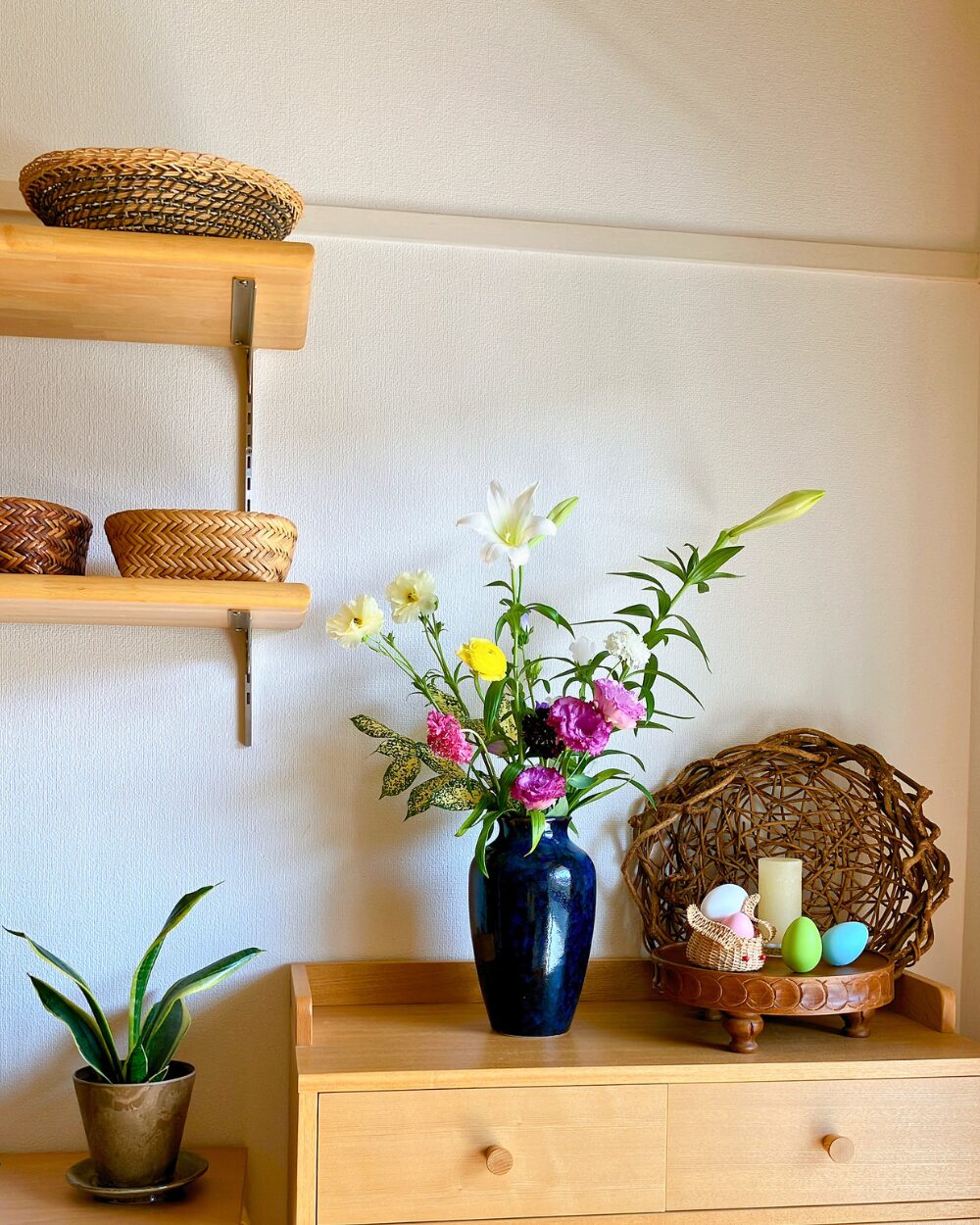
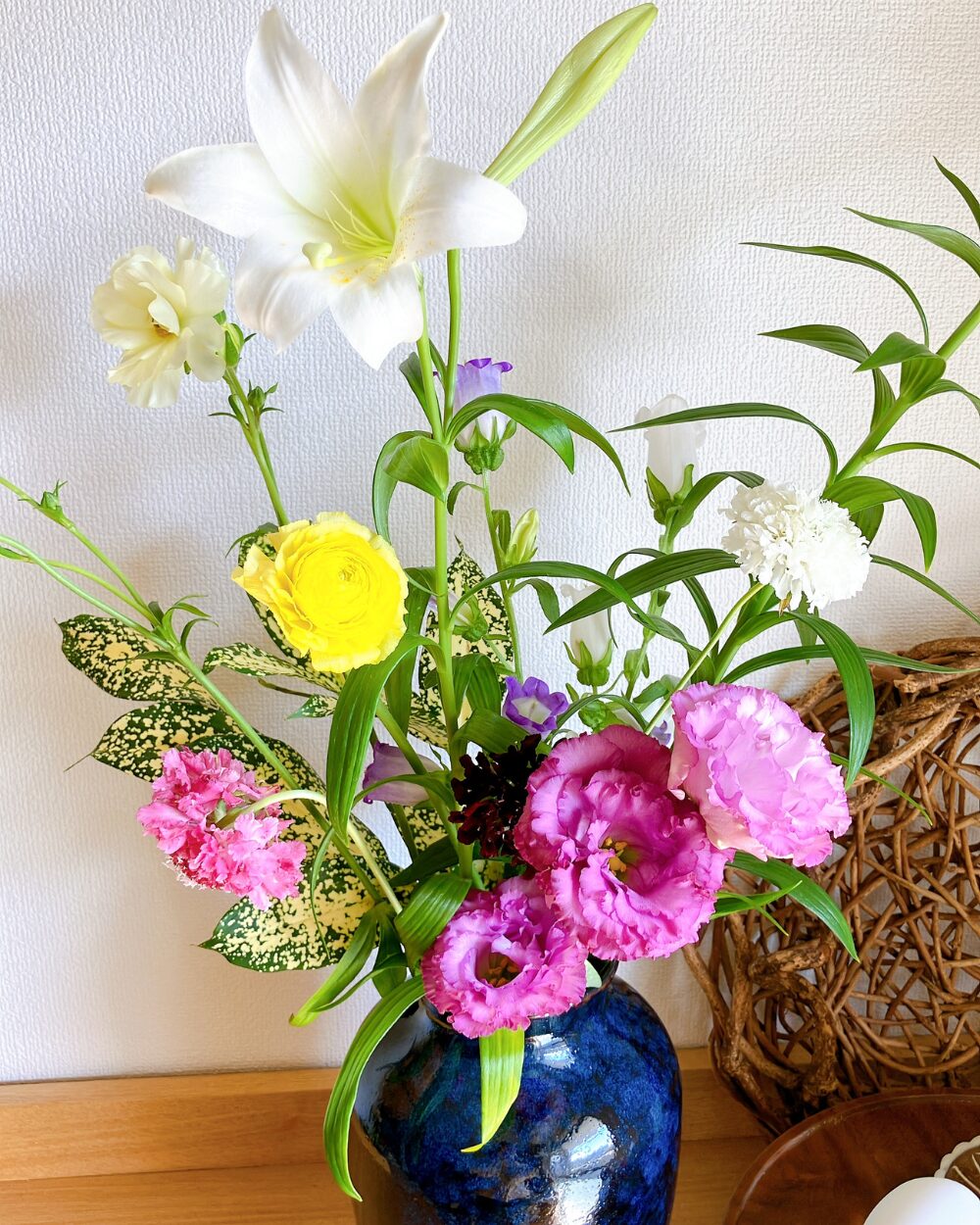
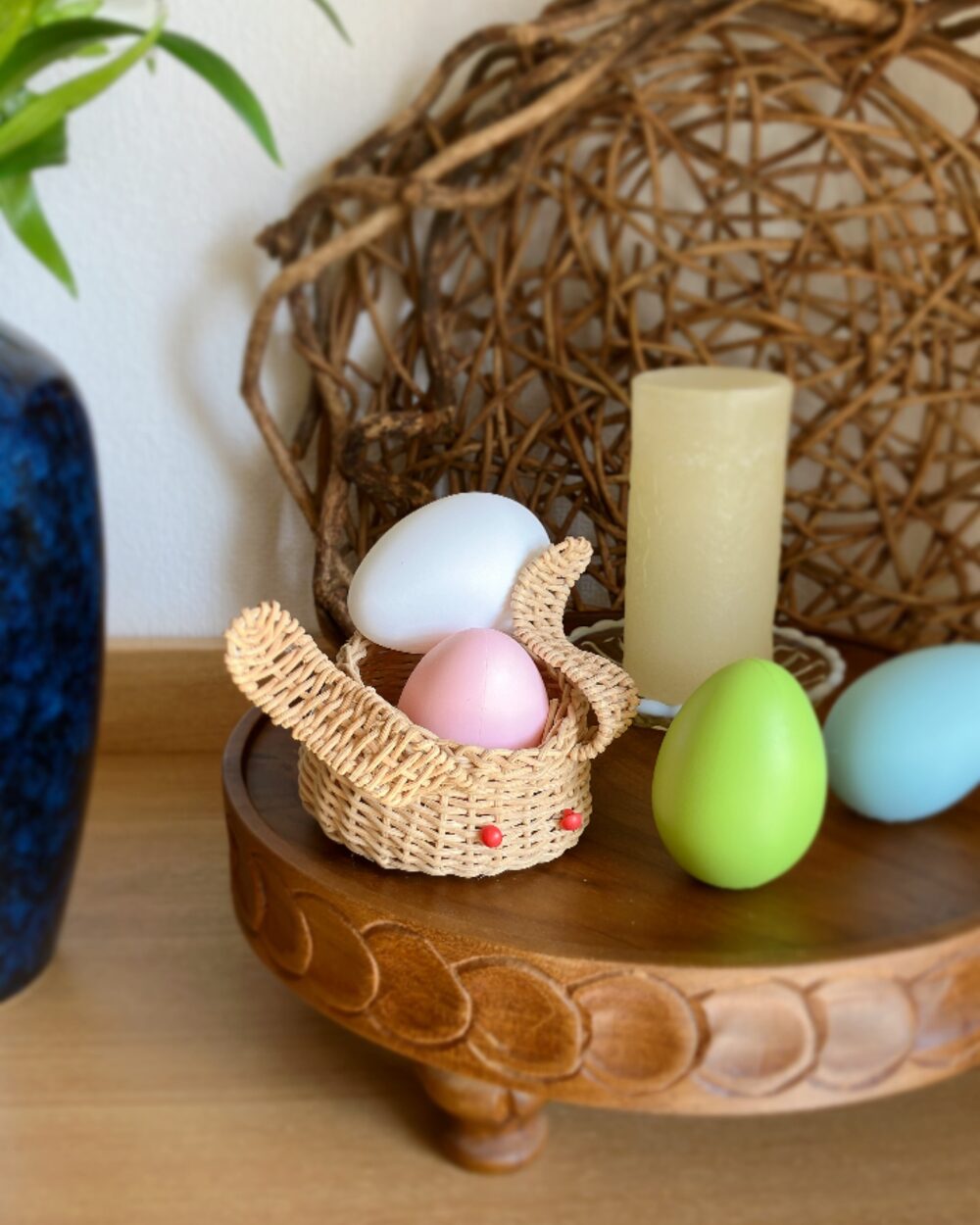
The process began with a large, deep blue Japanese vase. We styled it with a sense of weight and presence, placing it alongside a wood compote. To introduce the Easter theme, I used four simple eggs from a 100-yen store and a small wicker rabbit that my mother had woven by hand. Tucking the eggs into the rabbit’s basket and setting them against a backdrop of candles and an Akebi vine basket created a sophisticated, yet festive atmosphere. It was interesting to see how the traditional blue ceramic provided a grounding contrast to the playful, light-colored eggs.
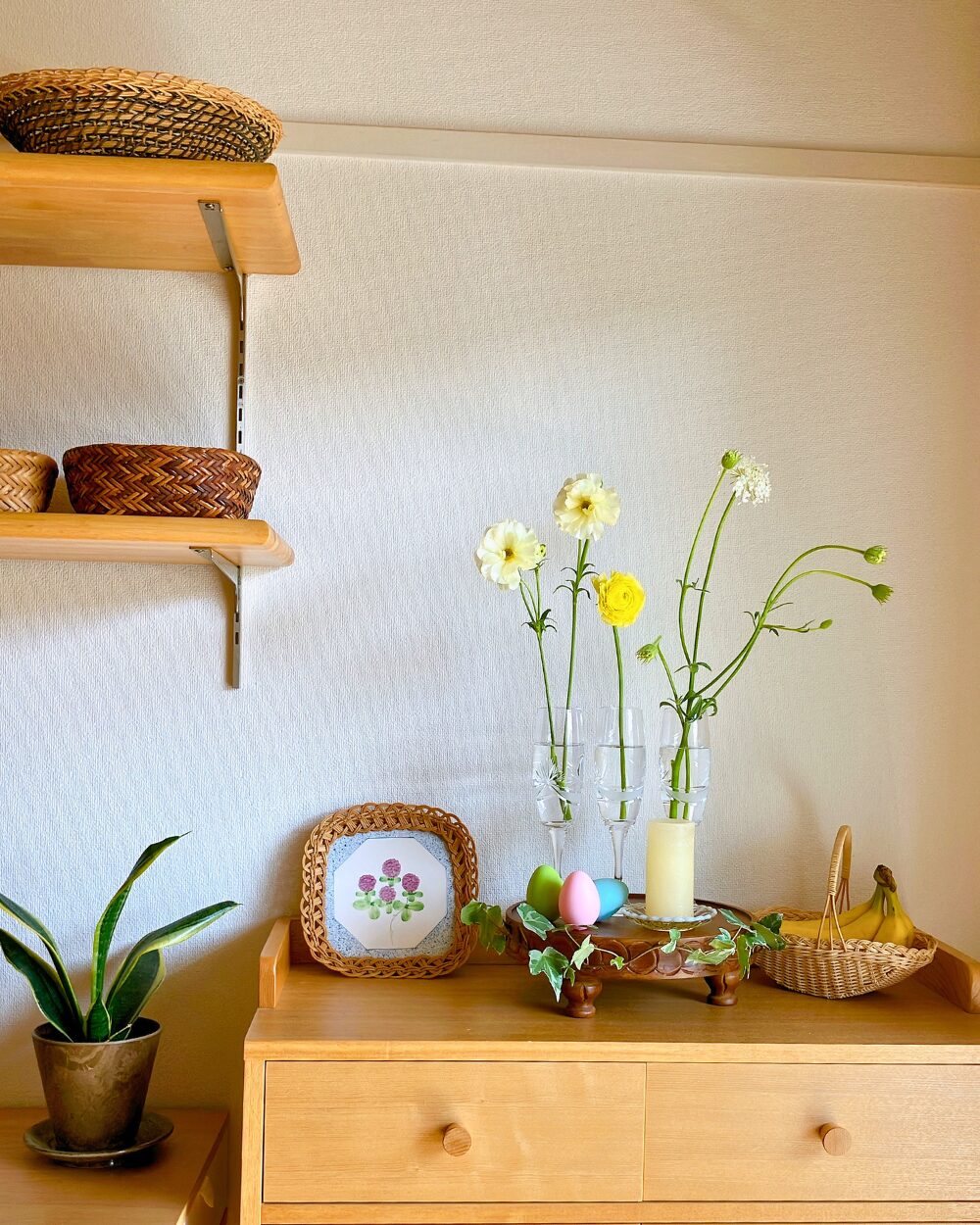
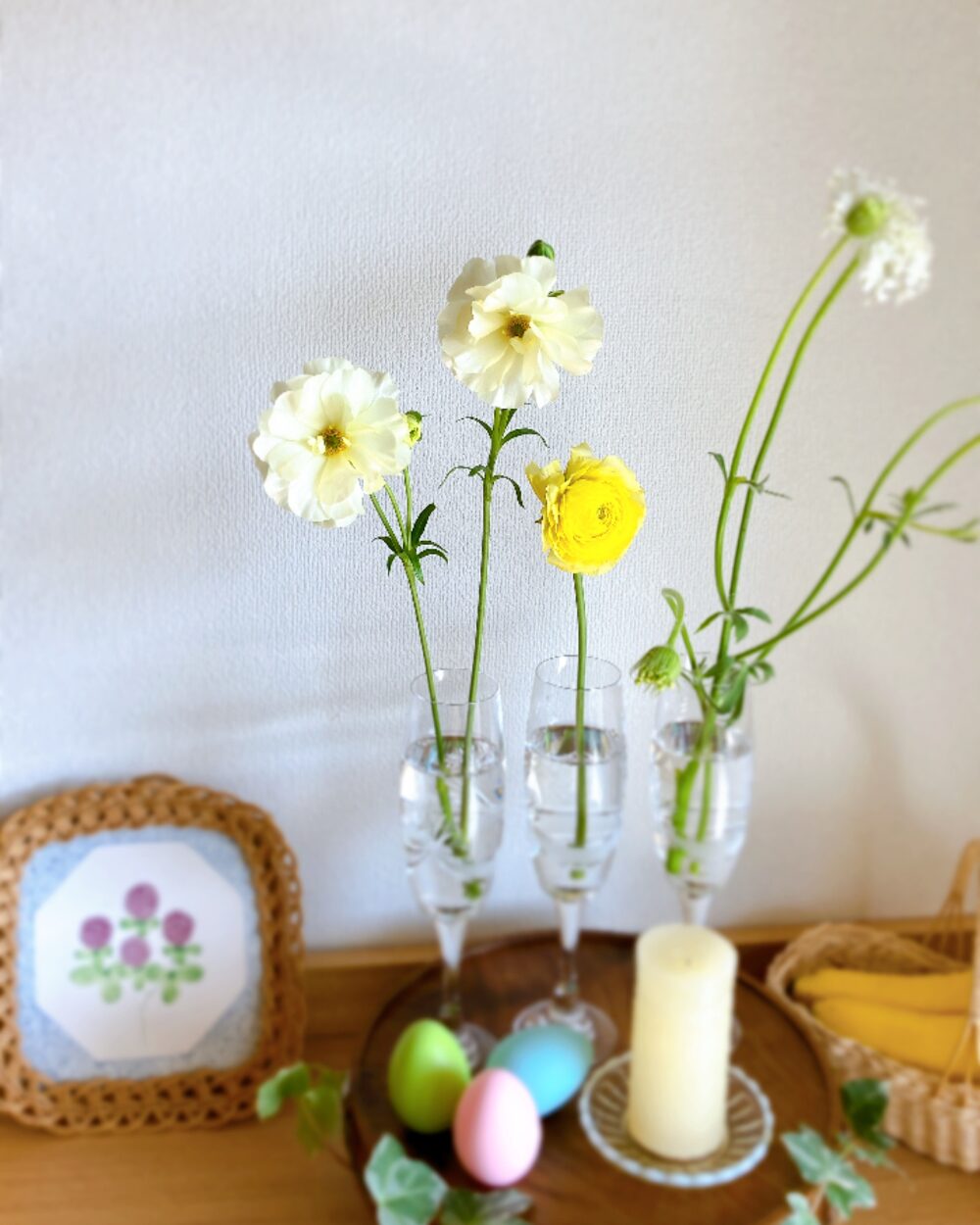
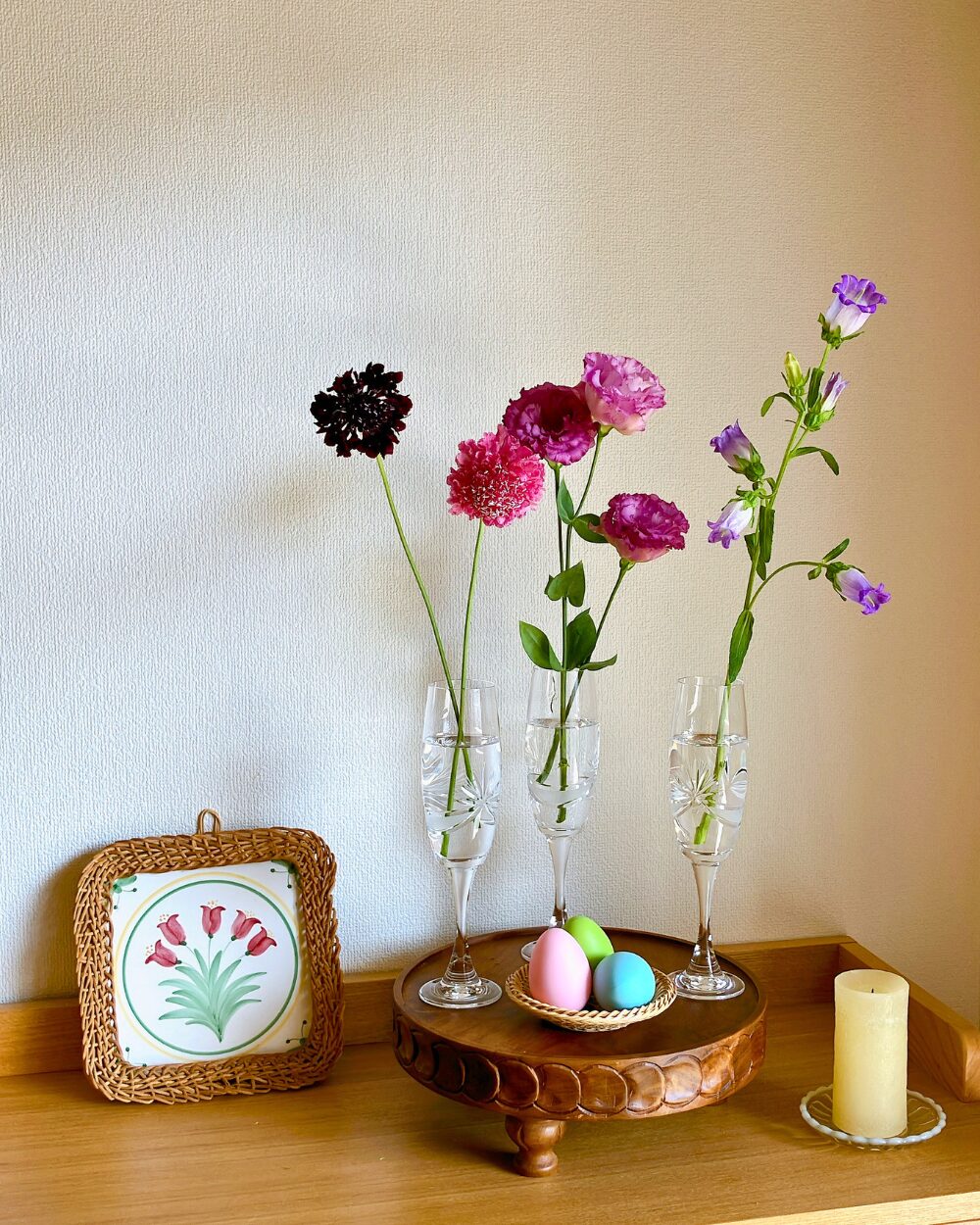
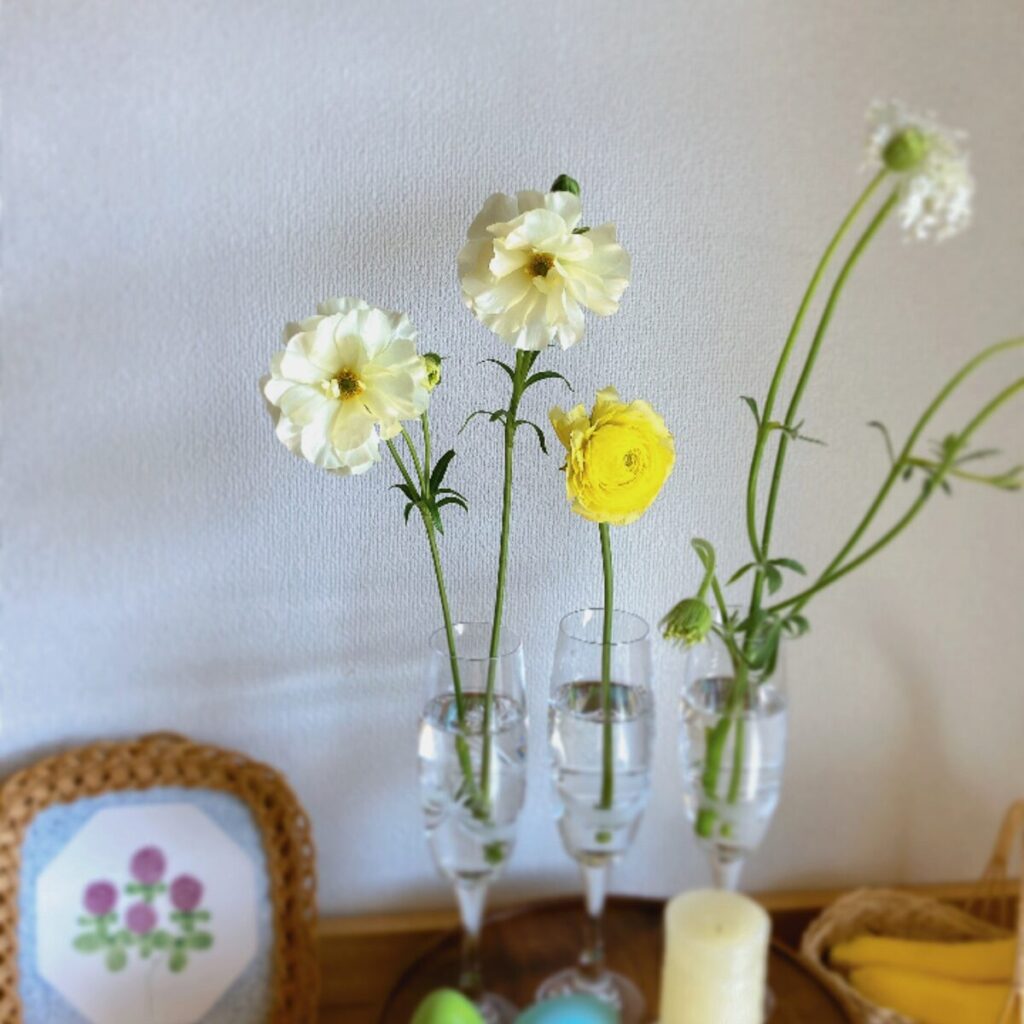
The next setup moved toward a more minimal approach using three champagne glasses. Each glass held only one or two stems—white blossoms and Ranunculus Lux. These were placed on the wood compote and surrounded by ivy and candles. By reducing the volume of the arrangement, the focus remained on the lines of the individual stems.
A second version used a more muted palette of purple Lisianthus, Scabiosa, and pale Campanula. The change in color altered the tone of the glass arrangements, making them appear more quiet and subdued.
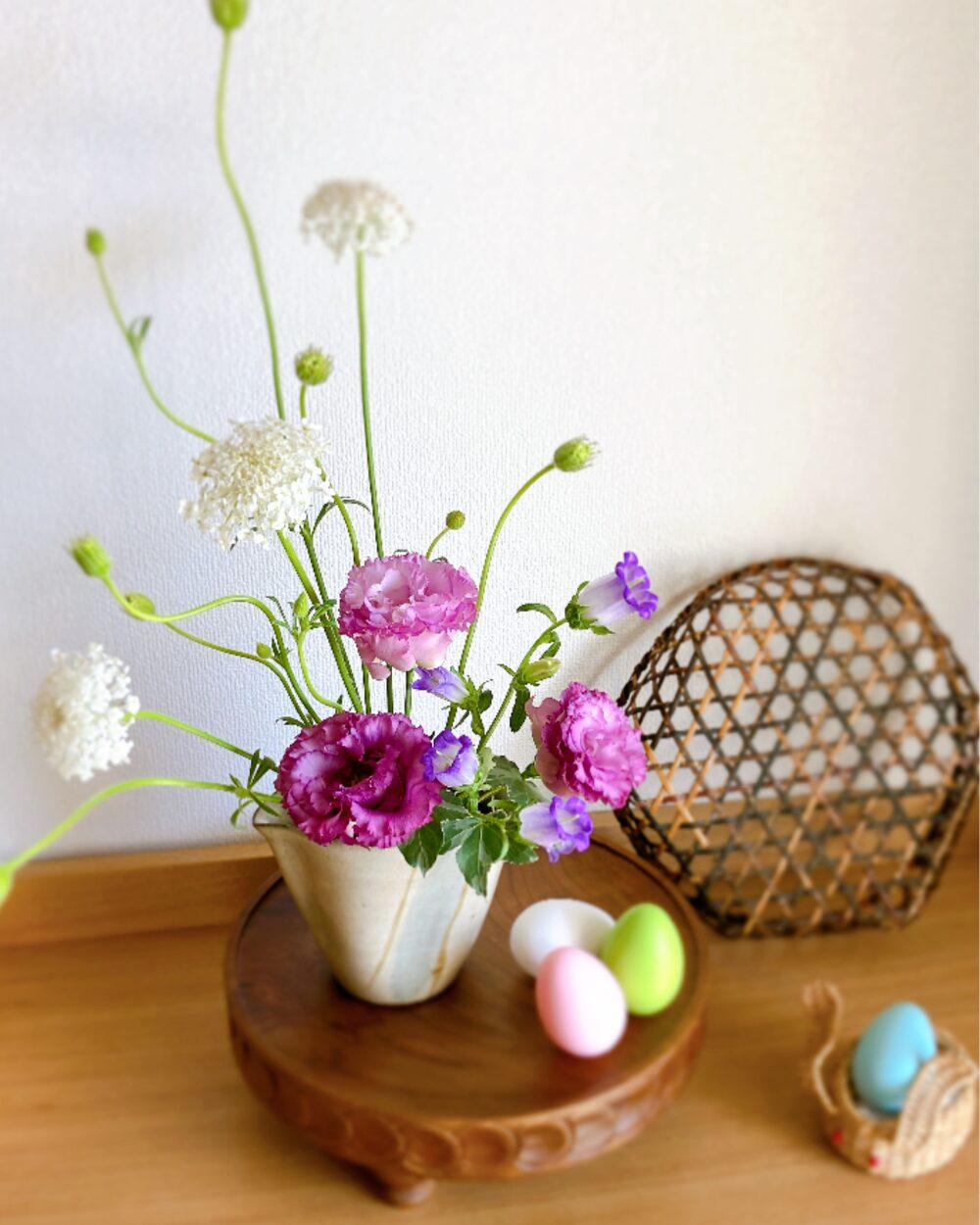
Another arrangement used a soba-tsuyu pitcher as a vessel. While the pitcher is a piece of Japanese tableware, the arrangement was composed with more volume. Lisianthus and white Campanula were placed in the pitcher and set near a wicker basket. The Easter eggs were positioned on the wood compote next to the vessel. It was an experiment in using a daily kitchen object as a seasonal centerpiece.
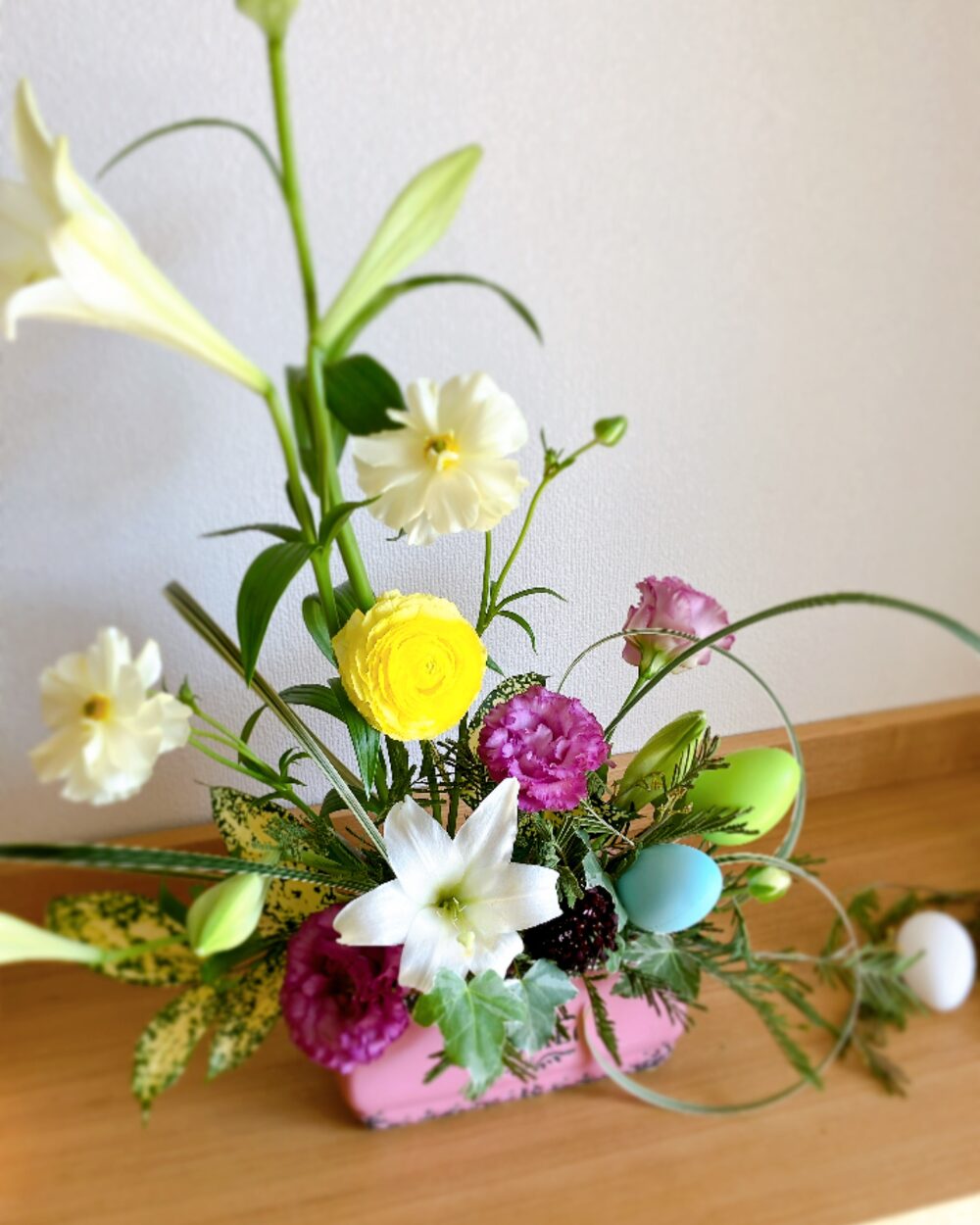
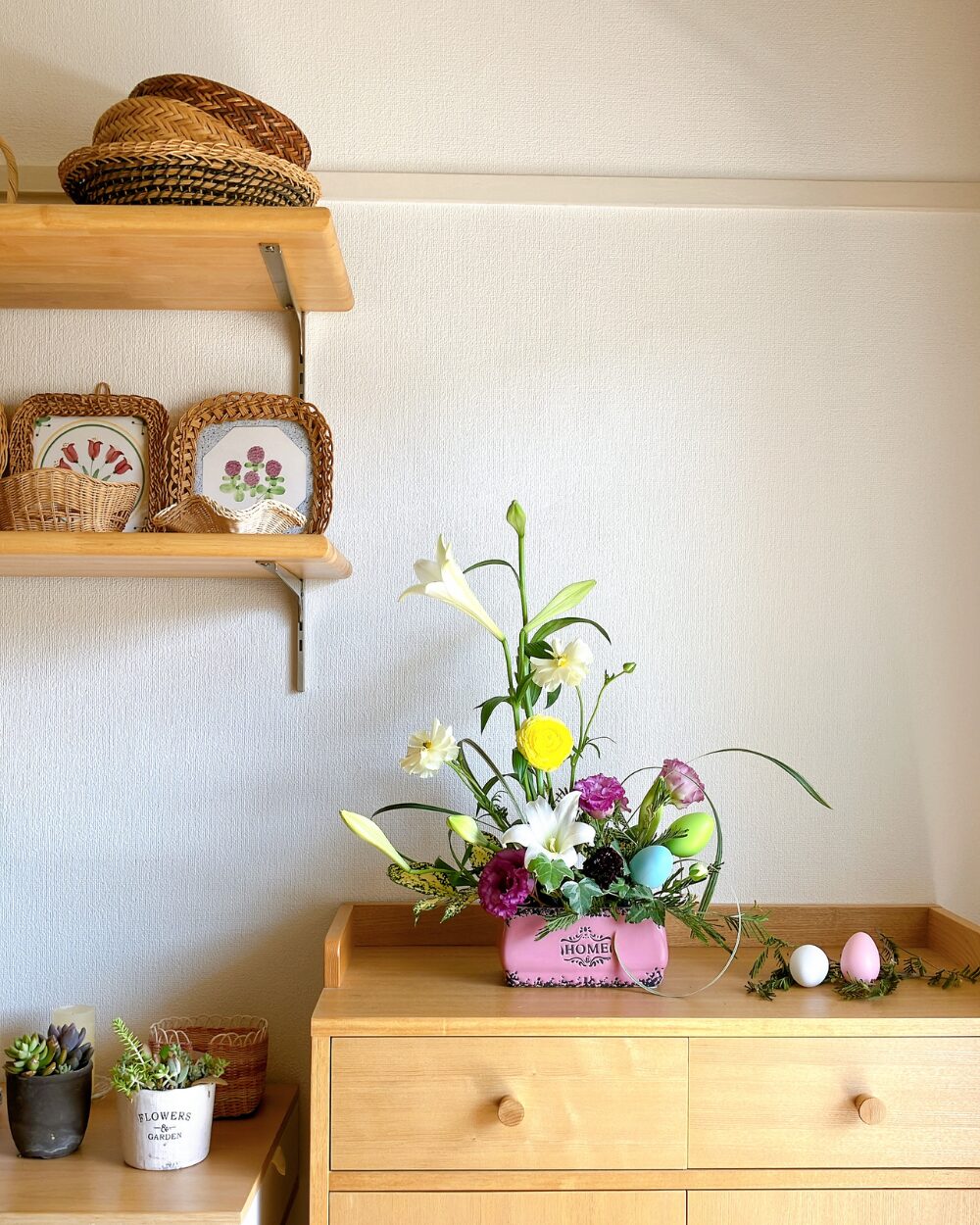
Finally, we moved to a fully Western-style composition. Using a pink vase, my mother created an arrangement where the lilies and Ranunculus Lux were the primary focus. This time, instead of placing the Easter eggs as separate accents, we tucked them directly into the flowers. It was the most celebratory of all the styles we tried.
As we worked with the flowers, my mom and I started talking about making a "style book" together. We got so excited sharing ideas about how we’d like to document what we do. It’s still just a big dream for the future, but it was really fun to just sit and talk about it together.
I hope your space brings you a small moment of peace today.
-Mizu