10 Minimalist Japandi Spring Floral Ideas: Finding Beauty in 1-3 Stems

2026-03-24

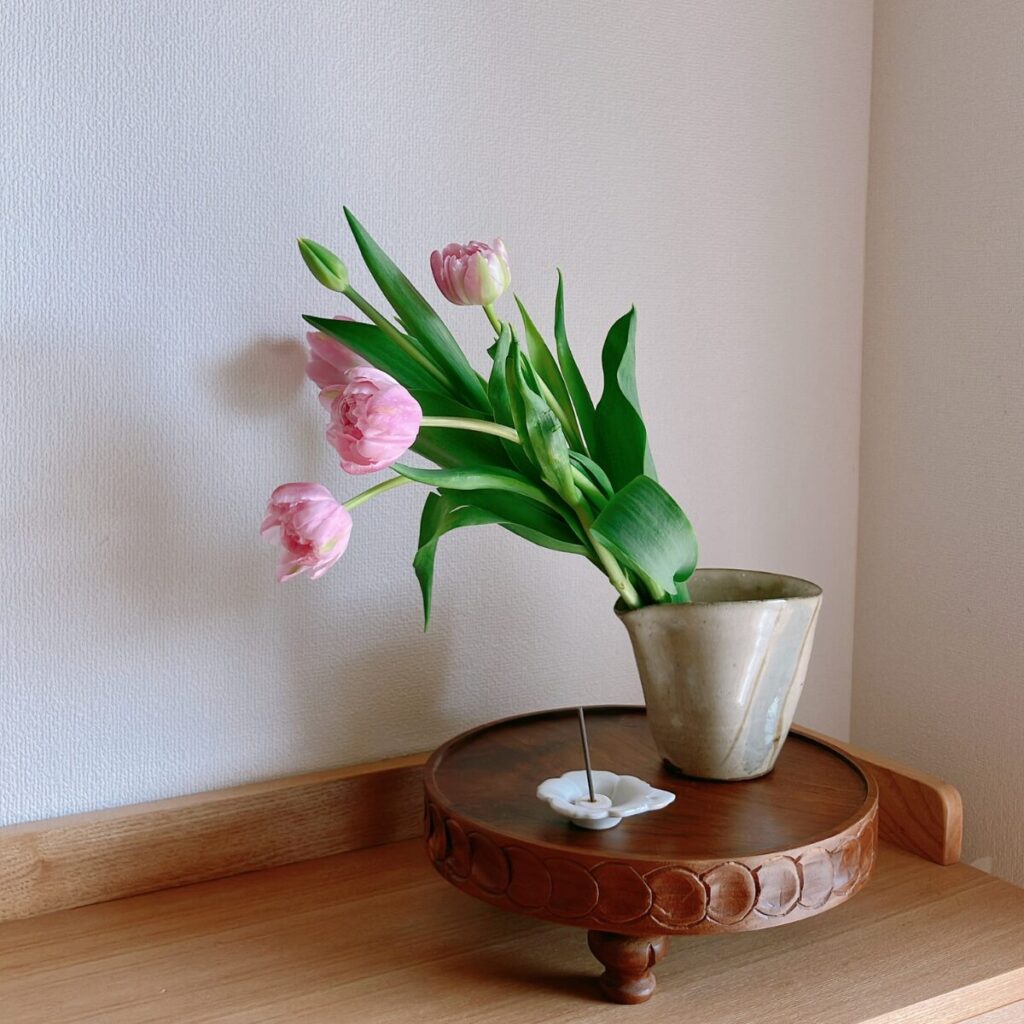
I’ve been using a wooden compote as a "stage" for my spring flowers.

Placing just 1 to 3 stems on this base creates a quiet, complete scene.

I also added a candle and a basket in the background to finish the look.

These 10 simple styles are what I put together while finding the right balance.

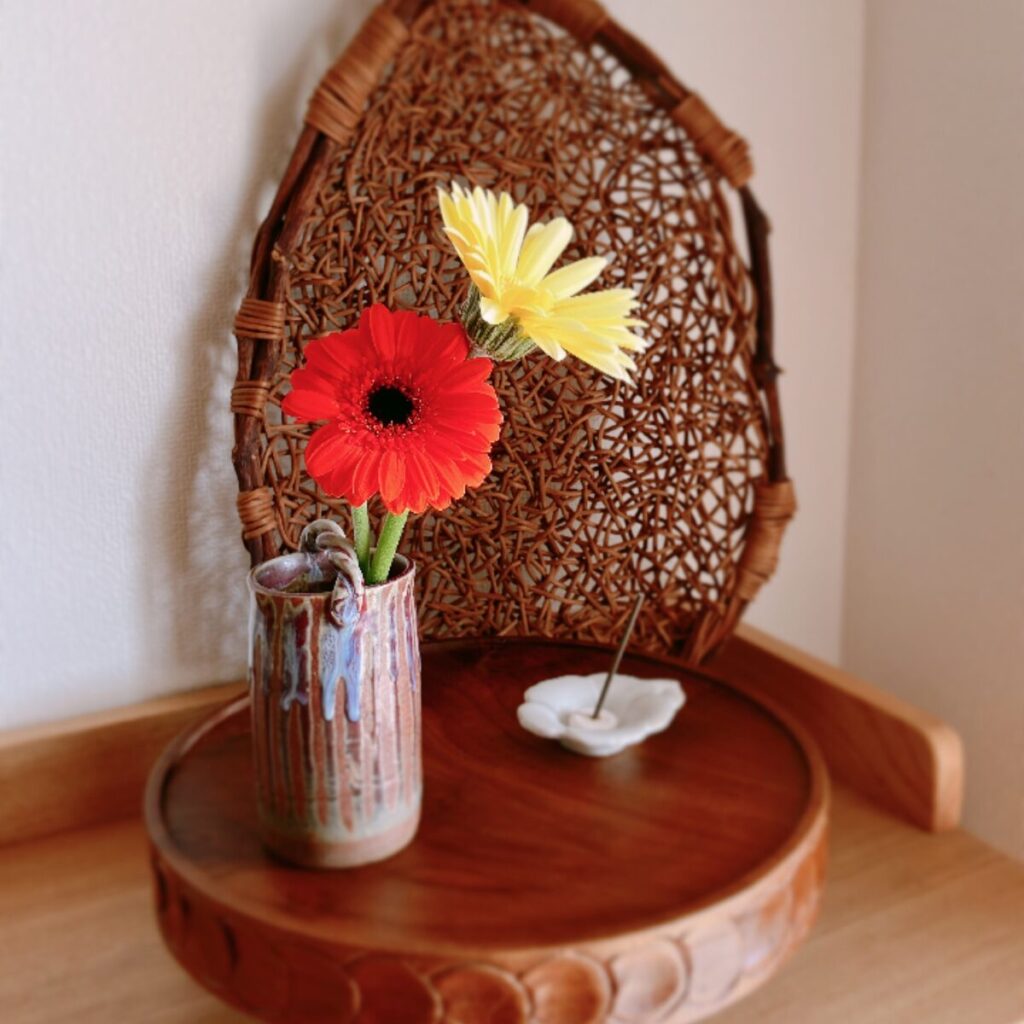
Style 01: Bright Gerberas and a Textured Basket

Started with two gerberas in a Japanese ceramic vase.

Yellow and orange gerberas in a Japanese ceramic vase on a compote with incense

I leaned a basket in the background to bring out the bright yellow and orange tones.

Adding a white flower-shaped dish with incense on the compote made the whole setup feel more intentional.

A variation of the first scene, swapping the incense for a candle on a glass plate

The moment of hesitation, finding the right feel.

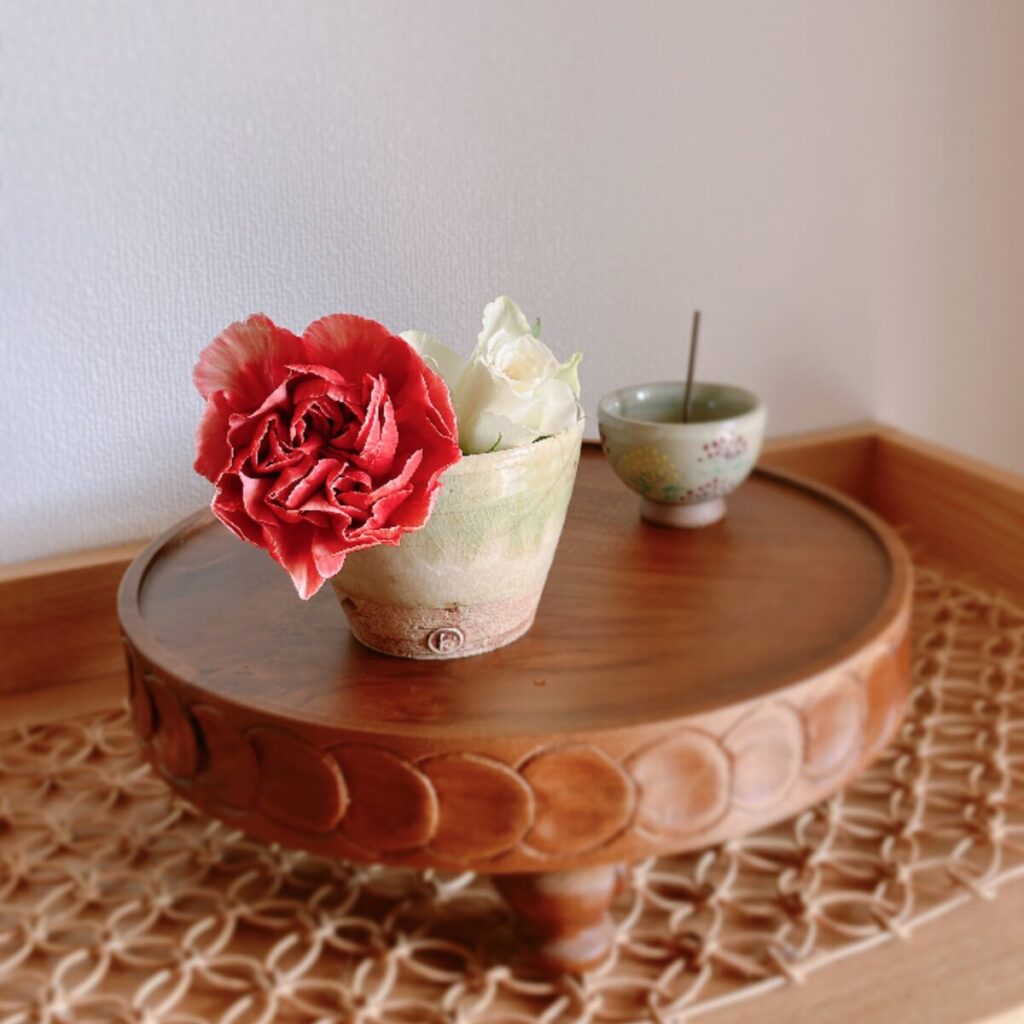
Style 02: Carnations in a Favorite Tea Cup

Next, I styled two carnations in a simple tea cup (yunomi).

Red-orange and white carnations in a teacup on a rattan mat with incense

I love the texture contrast between the ceramic and the rattan mat beneath the compote.

Adding a sake cup (ochoko) for incense in the background completes this cozy, personal space.

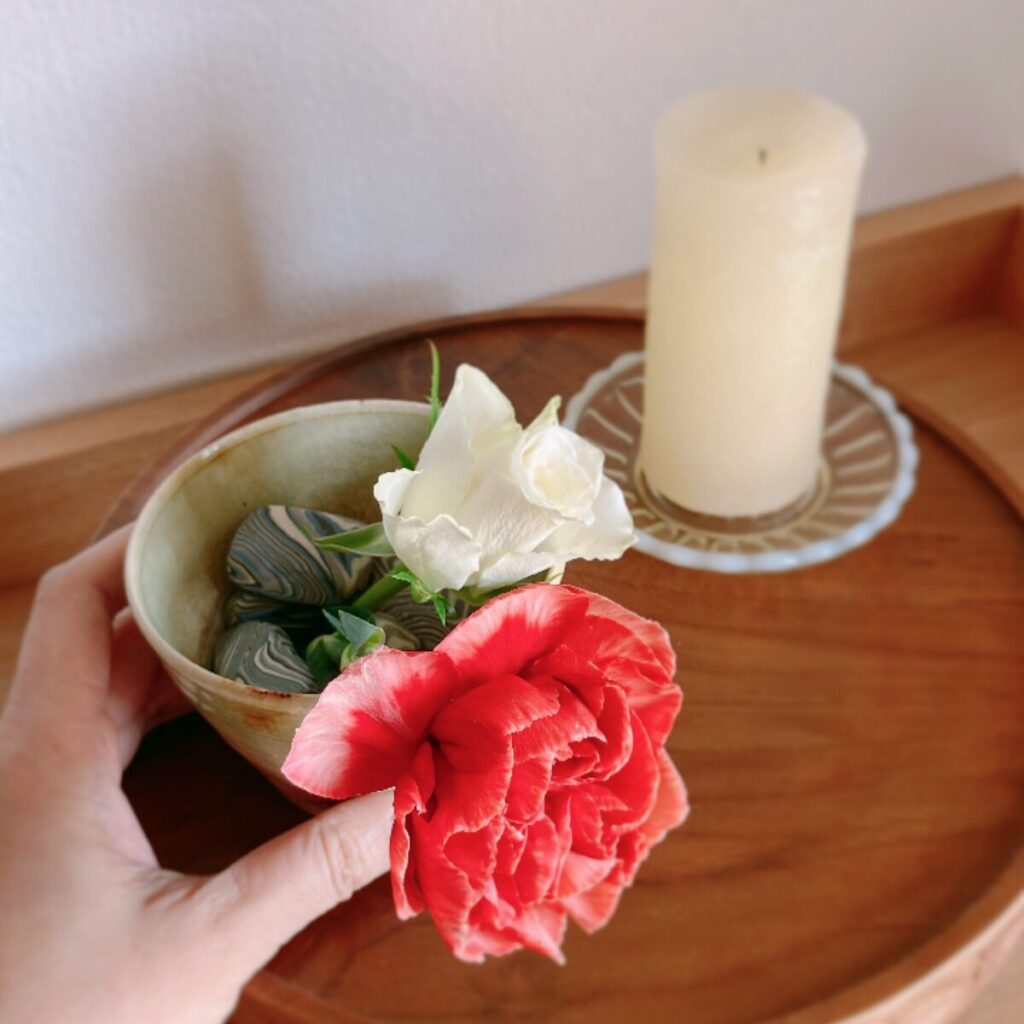
o hold the stems in place, I put a few stones inside the cup.

Close-up of stones inside a cup used to stabilize carnations, showing a floral hack

I was also testing how a candle looks in the background here.

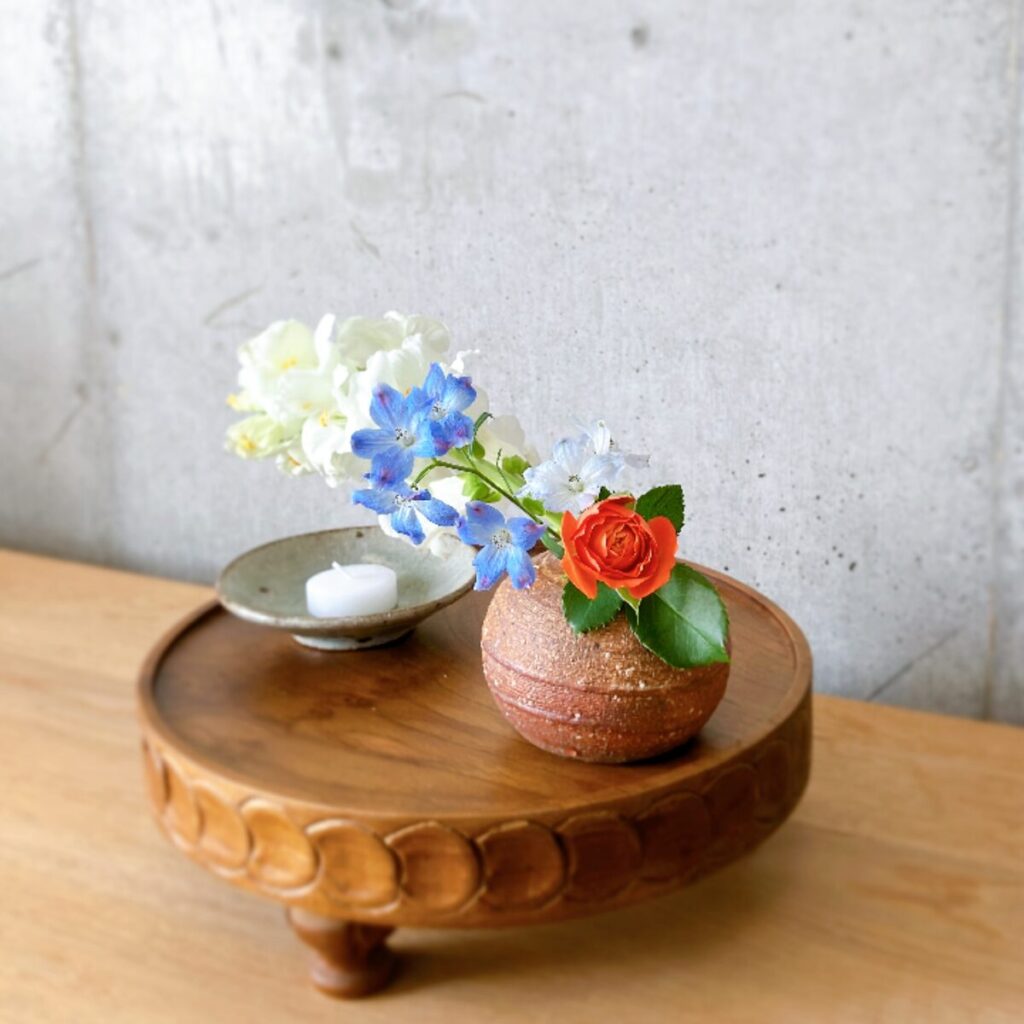
Style 03: Balancing Shapes and Heights

Mixing different shapes and heights.

Kasama-yaki round vase with orange roses and delphiniums next to a low candle

I used a round Kasama-yaki vase for orange mini roses and blue delphiniums, and snapdragons.

Adding a low candle on a small ceramic dish helps balance the overall composition and grounds the arrangement.

Style 04: Beauty in Everyday Objects

Finding beauty in the kitchen.

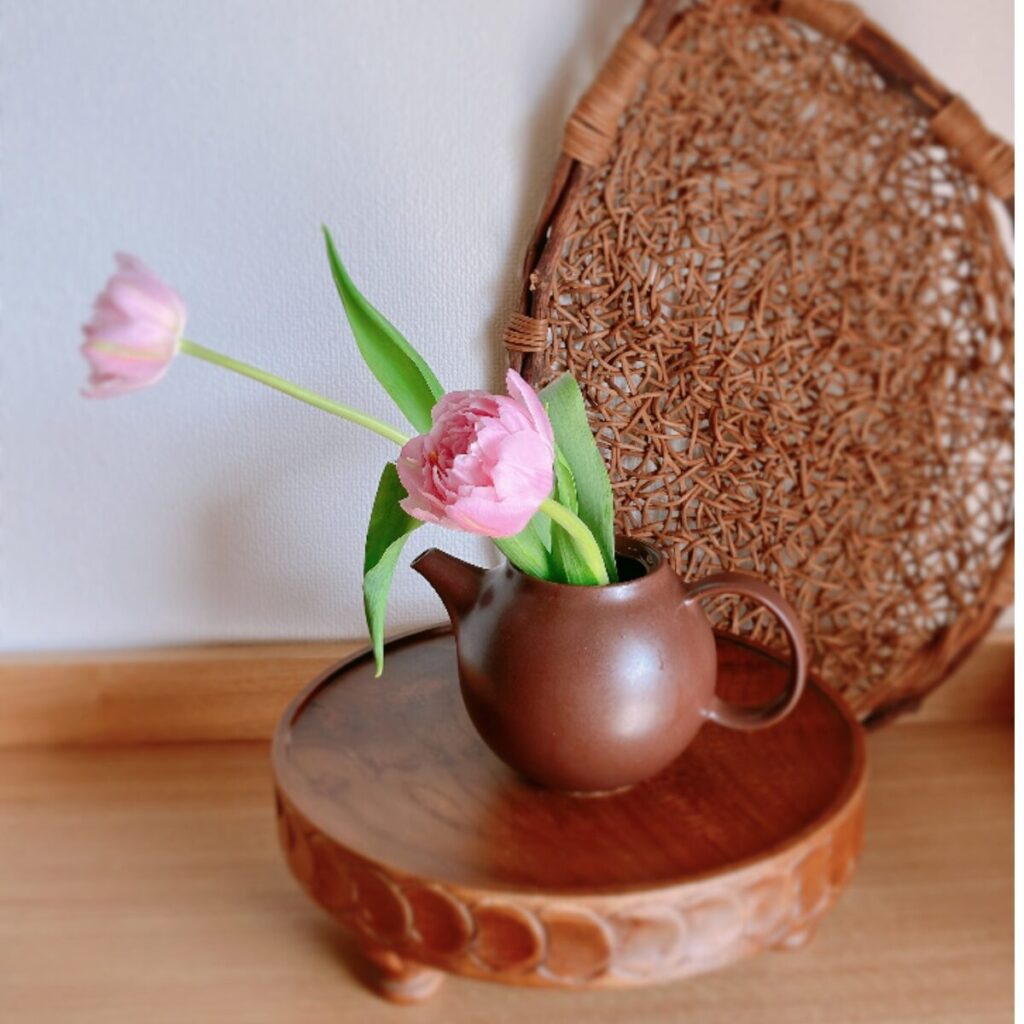
Two tulips arranged in a traditional brown Japanese teapot (Kyusu)

I used a brown teapot (kyusu) as a vase for two tulips.

The deep, earthy tone of the clay makes the soft spring petals look even more delicate.

Style 05: Deep Tranquility with Kyusu and Ochoko

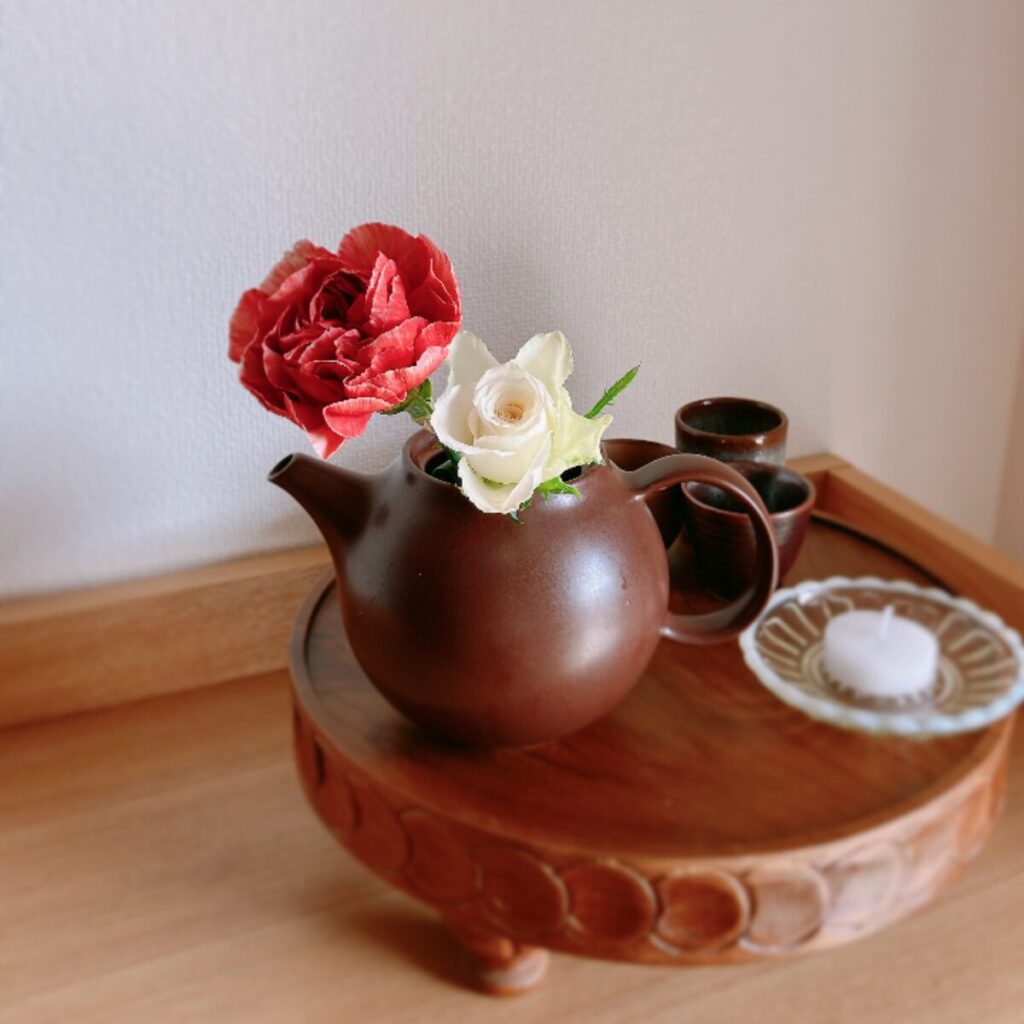
Back to the brown teapot (kyusu) for two carnations.

Carnations in a brown teapot with three matching sake cups and a candle.

Switching to these white and reddish flowers creates a completely different feeling.

To deepen the tranquil Japanese mood, I placed a glass dish with a low candle next to it and added three dark brown sake cups (ochoko) in the background.

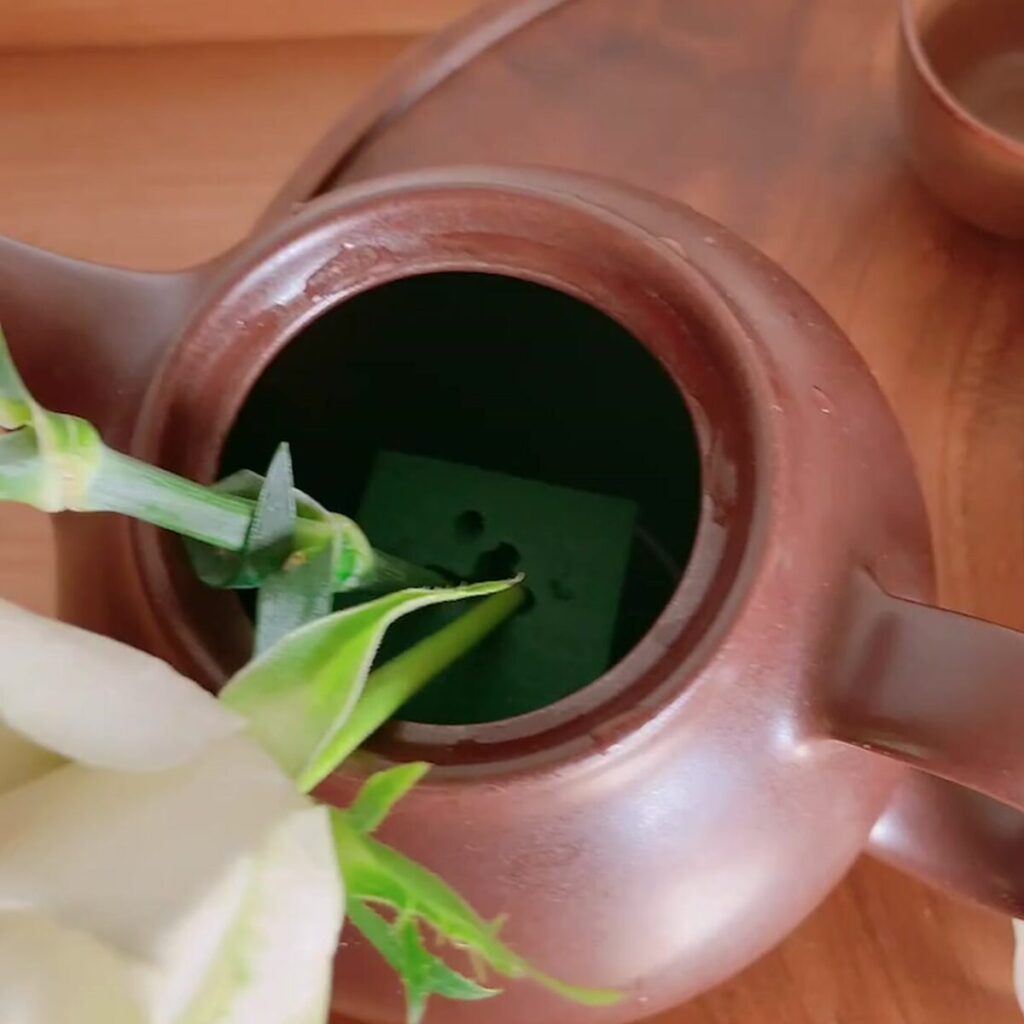
Since I’m only using two carnations, I tucked a small piece of floral foam inside the teapot to keep them standing just right.

Close-up of carnations in a traditional Japanese brown teapot, with the green floral foam (Oasis) used for stabilization clearly visible inside

Style 06: A Harmony of Textures

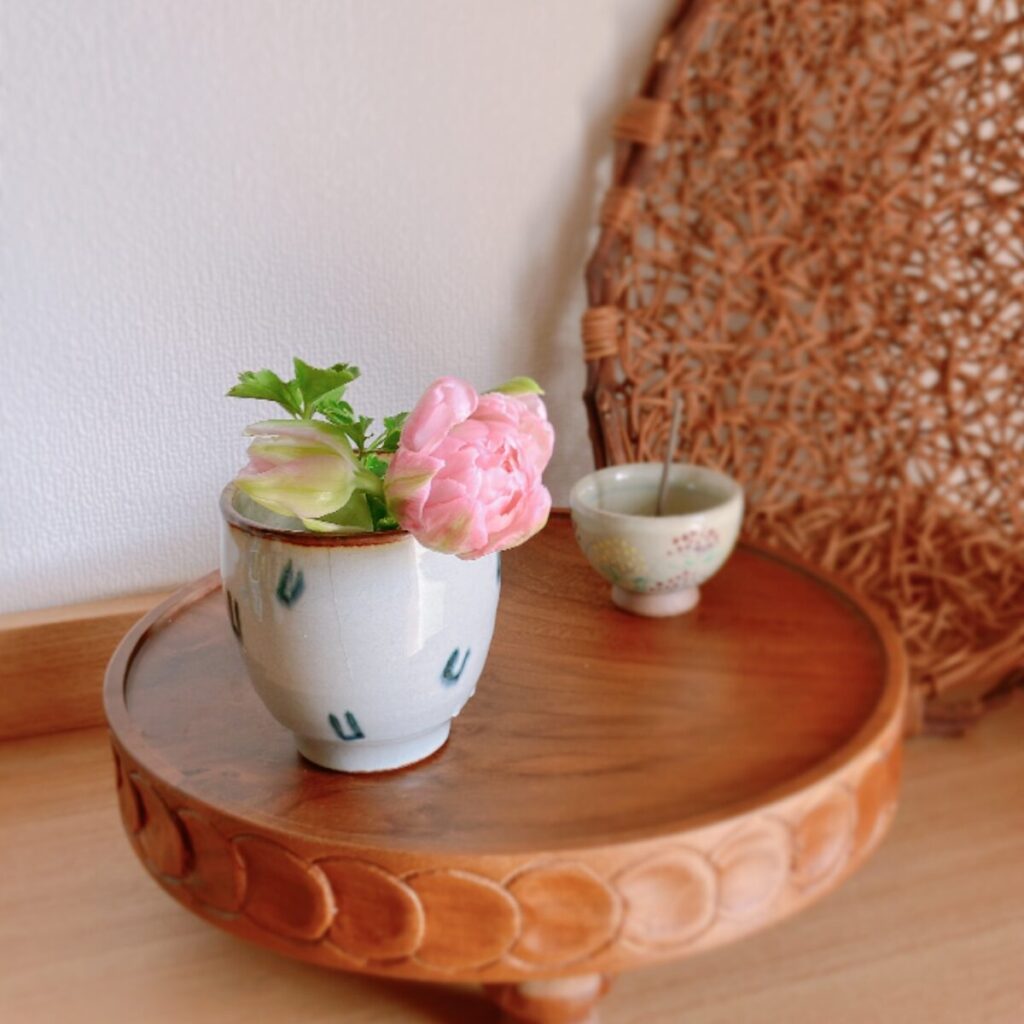
I tried placing a tulip in a teacup and setting some incense in a small sake cup.

Tulips in a Japanese teacup with incense and a woven basket in the background

I noticed the tulip has such a lovely, rounded charm, so I paired it with a small sake cup that has a similar soft curve.

The rustic texture of the Akebi basket in the background really helps tie all these elements together beautifully.

Style 07: A Fusion of East and West

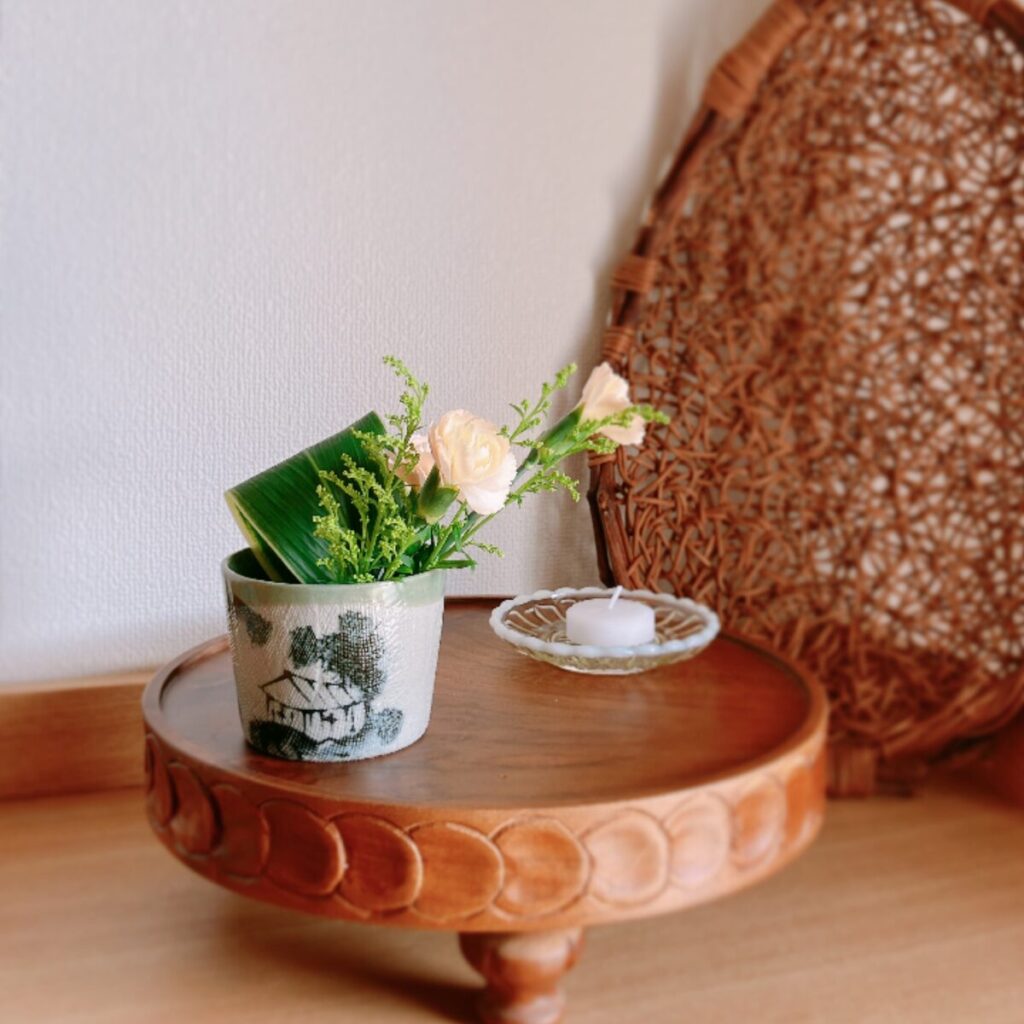
I paired this traditional Japanese-patterned cup with Western flowers like carnations and dracaena for an eclectic mix.

Soba-tsuyu cup with carnations and styled dracaena leaves against an akebi basket

By adding a matching candle and a rattan basket in the background, all these different elements come together in a warm, seamless fusion.

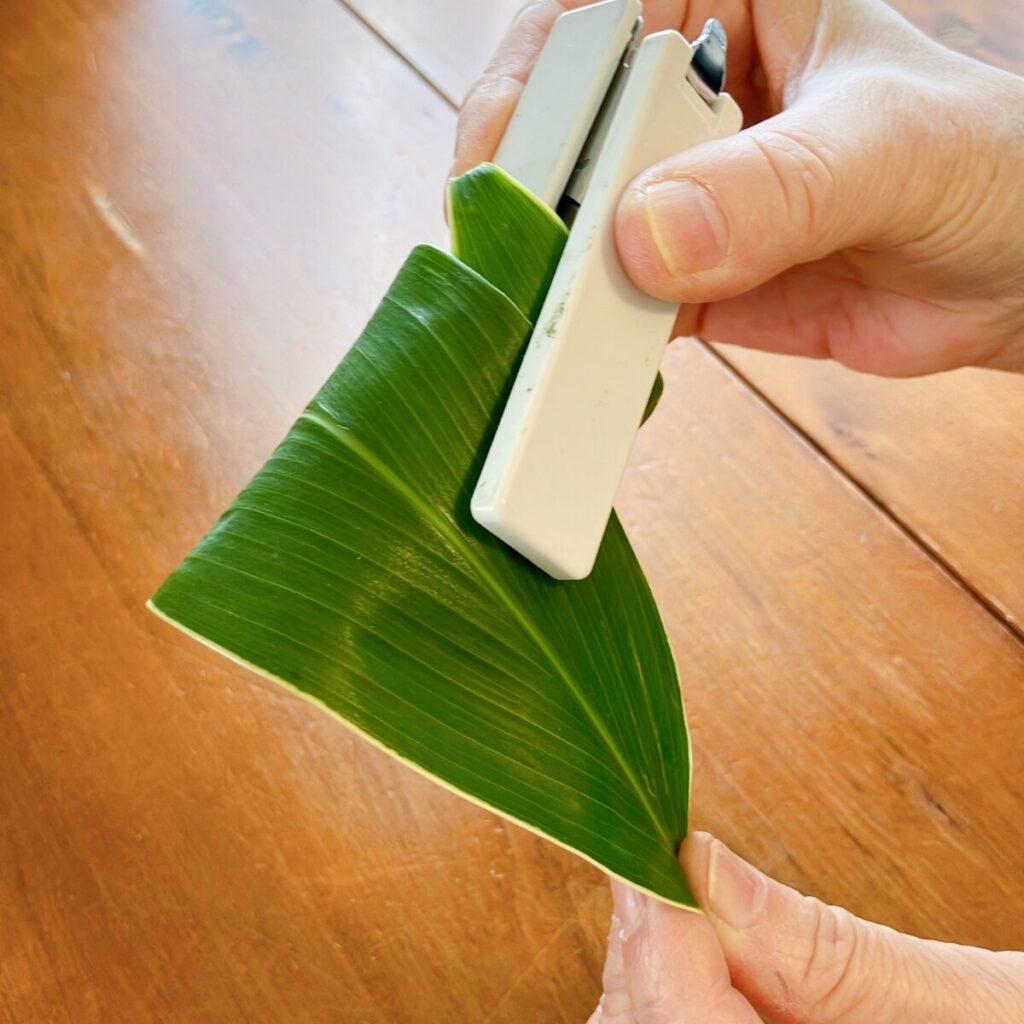
Just a small note—I actually curled the dracaena leaves and secured them with tiny staples.

Close-up showing a hand curling a green dracaena leaf and securing it with staples for a floral arrangement hack

It’s an easy trick to give the greens a bit more shape and structure.

Style 08: Coordinating with Subtle Colors

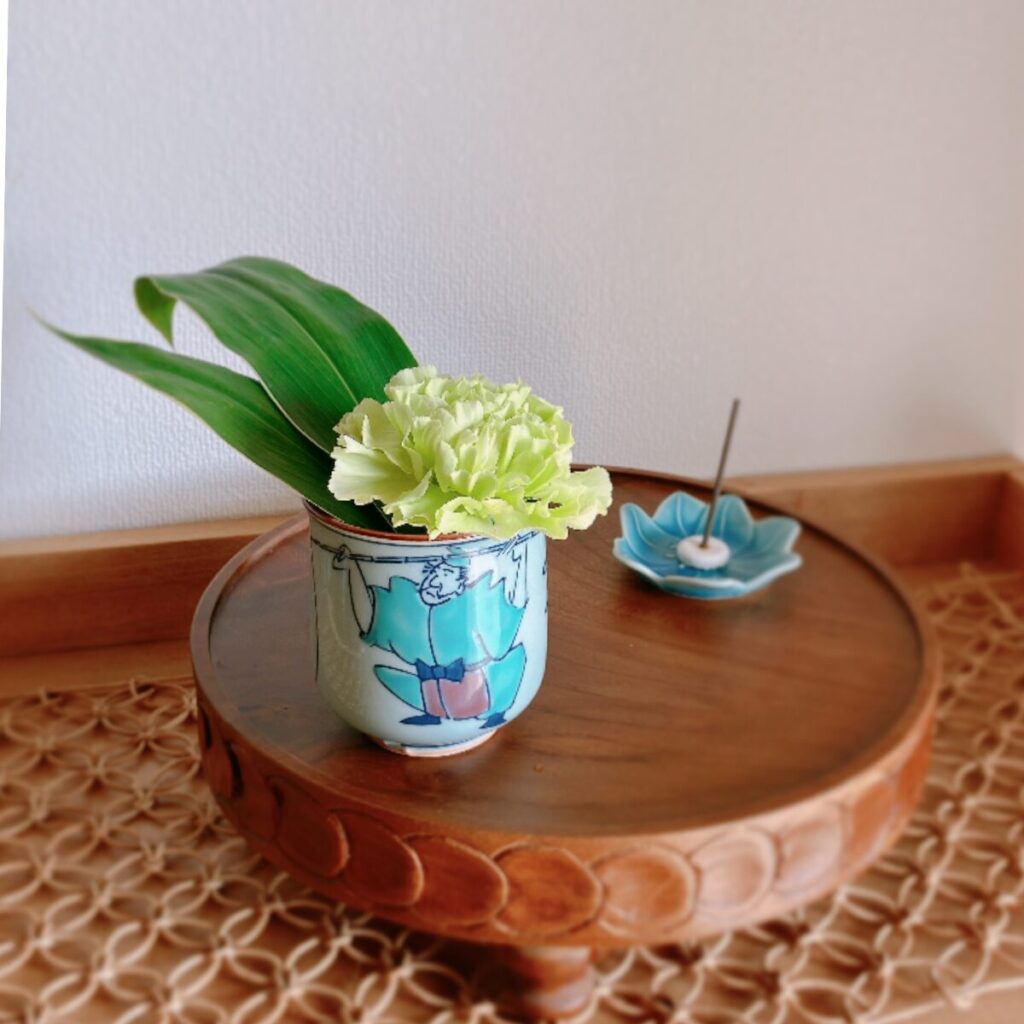
I paired this teacup, featuring a subtle blue-tinted kimono illustration, with a large, pale green-white carnation.

Teacup with a kimono illustration featuring a carnation and a blue bean plate

To pull the colors together, I added a small flower-shaped bean plate in a matching blue-green shade as an incense holder.

It’s a simple way to create a sense of unity just by picking up a color from the vessel’s design.

Style 09: The Beauty of Simplicity

After experimenting with different patterns, I felt like returning to something much simpler.

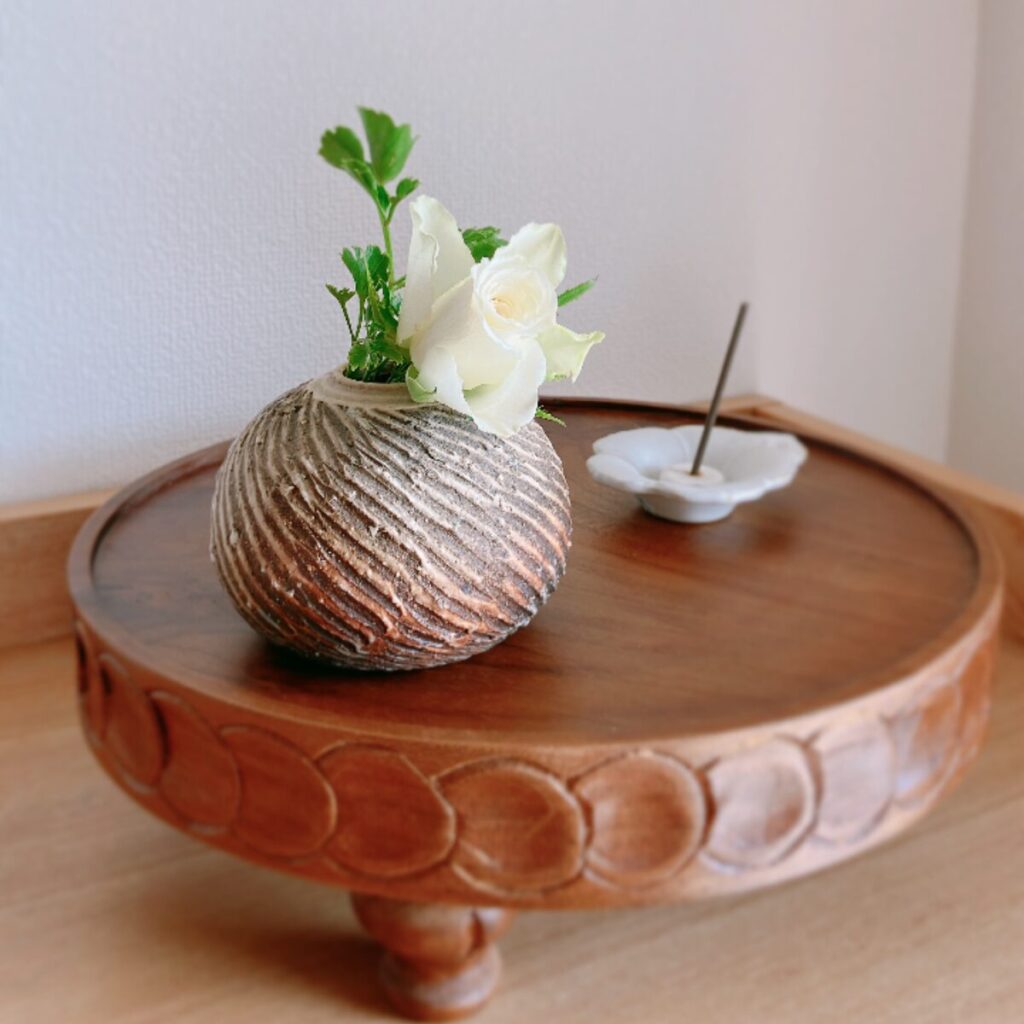
I paired a white rose in a round ceramic vase with a matching white bean plate for the incense.

Greenery and rose in a round vase with a white flower bean plate

This monochromatic approach feels so quiet and intentional—it’s a gentle reminder that sometimes, less really is more.

Style 10: Breaking the Rules for a Bold Finale

For the finale, I decided to keep the tulips long instead of cutting them short like the previous styles.

Tall tulips in a soba-tsuyu pitcher with a flower-shaped bean plate in the foreground

I placed them in a soba-tsuyu pitcher, and while the height far exceeds the traditional "golden ratio," the 2.5:1 balance creates a striking, high-energy impact.

Finishing with a small flower-shaped bean plate for incense, this oversized look feels like the perfect, confident ending to my experiment.

Final Thoughts: How a Few Stems Change the Room

Looking back on these ten styles, I’ve seen how even just a few stems of flowers can change the whole mood of a room.

It’s not about having perfect tools, but about those small, thoughtful tweaks—like pairing a favorite cup with a candle or adding a bit of height with a compote.

These little experiments have helped me find a new balance in my daily life, and I hope they inspire you to pick up a few flowers and see how they change your own space.

    -English